Metal, Machinery & Watchmaking

Forschungsingenieur/in

You develop and design innovative systems for research.
Forschungsingenieur/in

01 · Overview

What this profession is about

Forschungsingenieur/in lead development projects, calculate machine parts, and conduct research experiments.

You stand at the heart of innovation as a Forschungsingenieur/in. Your task is to develop new methods and machines. You lead projects, work out precise calculations, and design test facilities. Your analytical thinking and creativity drive technical development forward. You work across disciplines and put new technologies into practice.

FieldMetal, Machinery & Watchmaking
Education pathHigher Education Profession
IndustryElectrical Engineering
Swissdoc 0.550.1.0

02 · Salary

What you can earn

MedianCHF 73'500
CHF 63'000CHF 102'000
⚠ Estimated — based on a related role
Salaries reflect Swiss market data. Range covers entry to senior. Salary reference based on Mineur. Based on 14 observations, updated 7 months ago.

Salary by experience

100kmedian 74k70k70k106k72k141k0-2 yrs3-5 yrs6-8 yrs12-21 yrs21+ yrs
View as table
ExperienceSalary (CHF)
0-2 yrsCHF 70'320
3-5 yrsCHF 70'320
6-8 yrsCHF 105'588
12-21 yrsCHF 72'000
21+ yrsCHF 141'000

Salary trend

+43% over decade
60k80k100k72k63k103k2017-20192020-20222023-2025
View as table
PeriodSalary (CHF)
2017-2019CHF 72'000
2020-2022CHF 63'000
2023-2025CHF 102'794

Top paying industries

  • Building trade / Real estateCHF 87'50010 obs.
View as table
IndustrySalaryObs.
Building trade / Real estateCHF 87'50010

03 · Pathway

How to enter and grow

Swiss training pathway available in the full profile

  • 🎓 Forschungsingenieur/in

Official education path

You typically start with a master's degree at a university of applied sciences or a university. The focus is on research and development.

Typical training path

Forschungsingenieur/in

Prerequisites

  • Master Fachhochschule FH
  • Master Universitäre Hochschule

Requirements

  • High communication skills (also in English)
  • Commitment and willingness to perform
  • Analytical, innovative, and networked thinking
  • Systematic problem-solving skills
  • Enjoyment of interdisciplinary collaboration

Where this can lead

Career changers are possible if you have a relevant university degree and proven practical experience in development.

04 · Skills & fit

What it takes

Required skills

  • Analytical thinking
  • Communication skills
  • Systematic planning
  • Creative development

Personality fit

  • Swiss career path
  • Career transition
  • Professional growth

05 · Daily reality

What the work feels like

Typical day

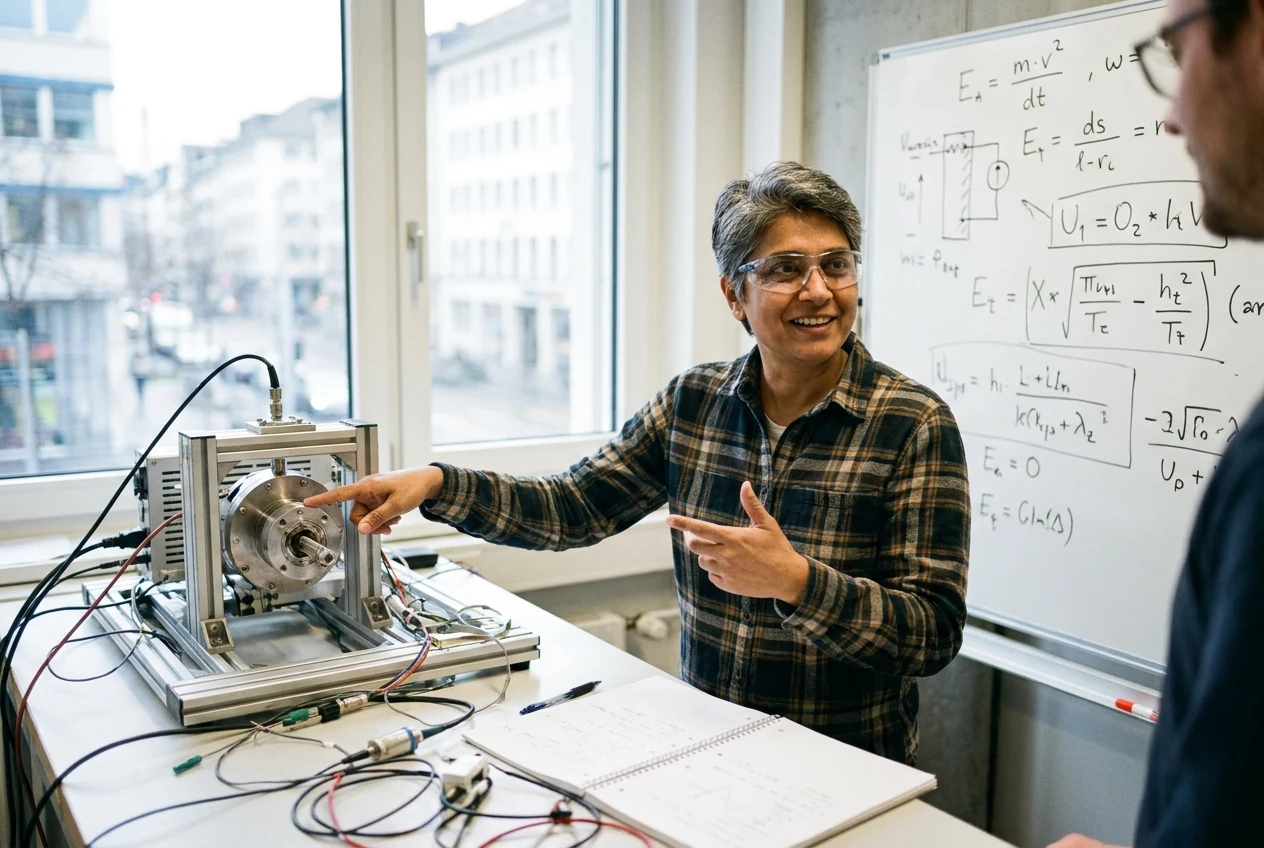
You stand at the test rig and check the measurement data of a newly designed test facility. At the same time, you discuss the next steps with the team.

  • You lead projects to develop new technical methods and systems.
  • You work out precise calculation bases to size complex machine parts.
  • You design test facilities and prepare them for operation.
  • You conduct experiments and evaluate the collected measurement data.
  • You coordinate interdisciplinary teams to achieve development goals.
  • You document technical results and prepare expert reports for managers.

Working conditions

You work in research labs, development centers, or at technical test rigs. You often switch between office desks and workshop areas.

Strengths

  • Analytical thinking
  • Communication skills
  • Systematic planning
  • Creative development

Trade-offs

  • High responsibility
  • Constant adaptation
  • Project uncertainty
  • Stress phases

06 · Similar

You might also explore

All in Metal, Machinery & Watchmaking