Culture & Media

Choreograf/in

You choreograph dance movements for the theatre and stage
Choreograf/in

01 · Overview

What this profession is about

Choreograf/in develop dance sequences for productions, lead the creative process and work closely with the ensemble.

A complex mix of movement, music and space comes together on stage. Choreograf/in take control of these elements. You design dance sequences, write them down carefully and guide the ensemble through the creative process. You combine artistic vision with precise organisation. Your goal is to bring emotions to life through body and space.

FieldCulture & Media
Education pathSpecialisation / Professional Function
IndustryTheatre, Music, Dance & Film
Swissdoc 0.826.9.0

02 · Salary

What you can earn

No verified Swiss salary data is available for this profession yet.
Salaries reflect Swiss market data. Range covers entry to senior. Salary reference based on Choreograf/in.

03 · Pathway

How to enter and grow

Swiss training pathway available in the full profile

  • 🎓 Choreograf/in

Official education path

You enter the field through specialised training in dance and choreography, as well as years of stage experience.

Typical training path

Choreograf/in

Prerequisites

  • Dance professional experience
  • Good general education
  • Knowledge of theatre, ballet/dance vocabulary, and cultural-artistic and social fields

Requirements

  • Movement imagination and musicality
  • Creative talent
  • Strong scenic imagination and sense of artificial space
  • Conceptual and pedagogical skills
  • Ability to collaborate
  • Time management
  • Team building
  • Leadership qualities

Where this can lead

Career changers can enter the field if you have solid dance training and verifiable artistic projects.

04 · Skills & fit

What it takes

Required skills

  • Creative movement skills
  • Conceptual thinking
  • Leadership strength
  • Cultural knowledge

Personality fit

  • Swiss career path
  • Career transition
  • Professional growth

05 · Daily reality

What the work feels like

Typical day

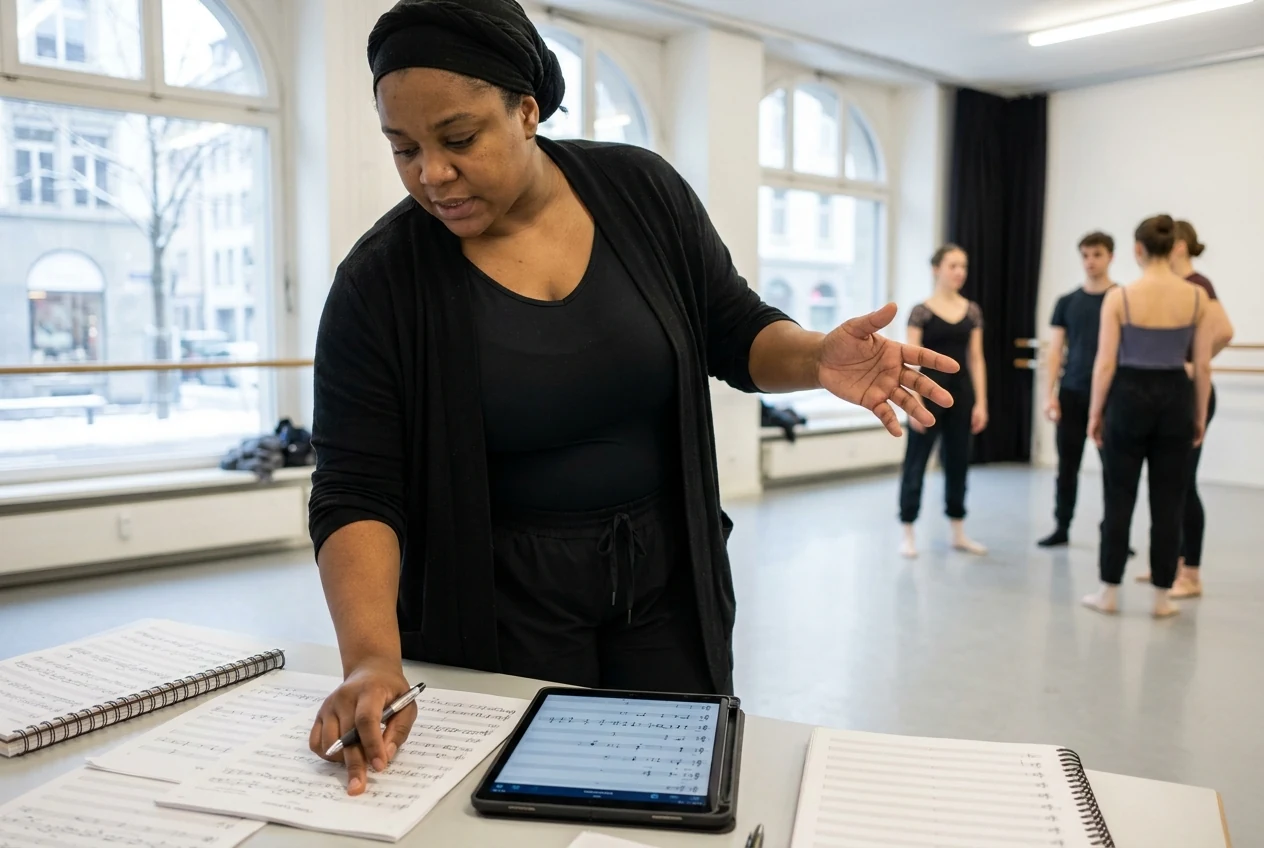
You stand in the rehearsal room and demonstrate new movement sequences while the ensemble follows the choreography. In between, you discuss the next scene with the musicians and the director. You ensure all artistic elements fit together perfectly.

  • You design and choreograph dance movements for various productions.
  • You work out the music scores and write down the sequences in choreographic notation.
  • You engage deeply with artistic themes and stage designs.
  • You lead the entire creative process and provide key impulses for development.
  • You rehearse performances and accompany the ensemble during practice sessions.
  • You coordinate collaboration with musicians, directors and other creatives.

Working conditions

You typically work in theatres, opera houses, dance studios or on freelance productions. You often move between rehearsal rooms, stages and offices for planning.

Strengths

  • Creative movement skills
  • Conceptual thinking
  • Leadership strength
  • Cultural knowledge

Trade-offs

  • Creative uncertainty
  • Flexible working hours
  • Project-based employment
  • High responsibility

06 · Similar

You might also explore

All in Culture & Media