Healthcare

Pflegewissenschaftler/in UNI

You develop and evaluate modern care models for clinics and nursing facilities.
Pflegewissenschaftler/in UNI

01 · Overview

What this profession is about

Pflegewissenschaftler/in UNI professionals research, teach, and improve care systems in hospitals, schools, and health organizations.

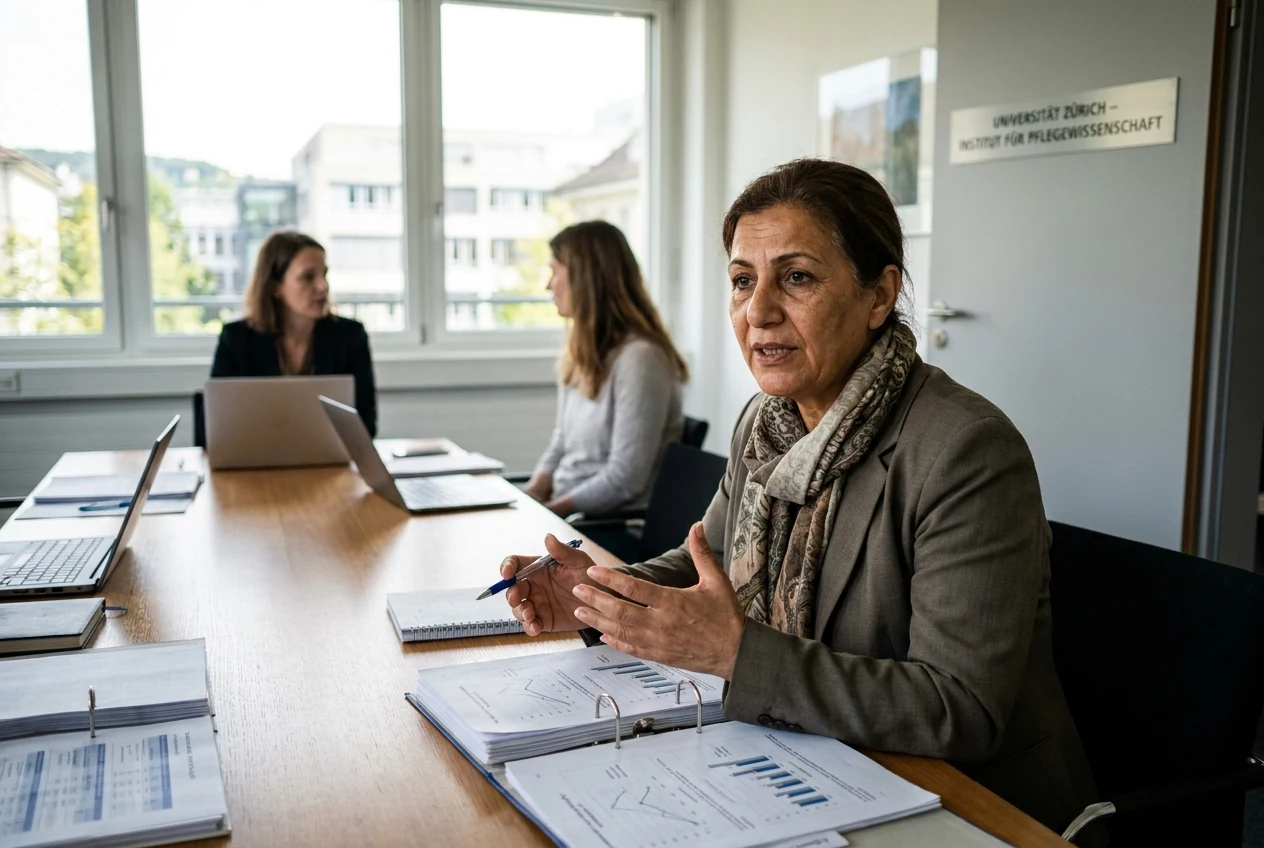
You shape the future of care through solid research and innovative concepts. In hospitals, educational institutions, or health authorities, you analyze care processes and develop new care models. You combine scientific findings with practical use. This improves patient care quality sustainably. You also pass on professional knowledge to the next generation.

FieldHealthcare
Education pathHigher Education Profession
IndustryCare & Support
Swissdoc 0.722.27.0

02 · Salary

What you can earn

No verified Swiss salary data is available for this profession yet.
Salaries reflect Swiss market data. Range covers entry to senior. Salary reference based on Pflegewissenschaftler/in UNI.

Salary by experience

80k90k100k100k80k101k107k0-2 yrs3-5 yrs9-11 yrs12-21 yrs
View as table
ExperienceSalary (CHF)
0-2 yrsCHF 100'000
3-5 yrsCHF 80'000
9-11 yrsCHF 101'000
12-21 yrsCHF 106'850

Salary trend

+11% over decade
100k105k96k106k2017-20192023-2025
View as table
PeriodSalary (CHF)
2017-2019CHF 96'000
2023-2025CHF 106'425

Top paying industries

  • Health care / Social servicesCHF 100'0005 obs.
View as table
IndustrySalaryObs.
Health care / Social servicesCHF 100'0005

03 · Pathway

How to enter and grow

Swiss training pathway available in the full profile

  • 🎓 Master in Pflege / Science in Nursing

Official education path

The path leads through university continuing education or a specialized master's degree in healthcare.

Typical training path

Master in Pflege / Science in Nursing

Prerequisites

  • Bachelor in Pflege / Science in Nursing

Requirements

  • Interest in healthcare
  • Analytical-conceptual skills
  • Ability to develop, implement, and review projects
  • Foreign language skills and a flair for communication issues
  • Good business administration knowledge

04 · Skills & fit

What it takes

Required skills

  • Health interest
  • Analytical thinking
  • Project management
  • Strong communication
  • Business know-how

Personality fit

  • Swiss career path
  • Career transition
  • Professional growth

05 · Daily reality

What the work feels like

Typical day

You sit at your desk. You analyze data on care standardizations. Then you prepare this data for staff training. You also discuss new quality standards with managers. This happens in inpatient departments.

  • You develop and evaluate new care models for clinics and outpatient services.
  • You plan budgets. You monitor the financial development of nursing departments.
  • You ensure the quality of practical training. You do this through regular audits.
  • You conduct administrative checks. You focus on the insurance aspects of care.
  • You design curricula. You teach students at nursing schools.
  • You research topics like symptom management and health behavior.
  • You advise professionals and institutions. You share current care concepts.
  • You coordinate interdisciplinary projects. You aim to improve patient care.

Working conditions

You work in hospitals, nursing homes, nursing schools, or health insurance companies. Your workplace changes with each project. You move between offices, training rooms, and clinical departments.

Strengths

  • Health interest
  • Analytical thinking
  • Project management
  • Strong communication
  • Business know-how

Trade-offs

  • High responsibility
  • Bureaucratic effort
  • Changing contexts
  • Emotional strain

06 · Similar

You might also explore

All in Healthcare