Culture & Media

Kameramann/-frau

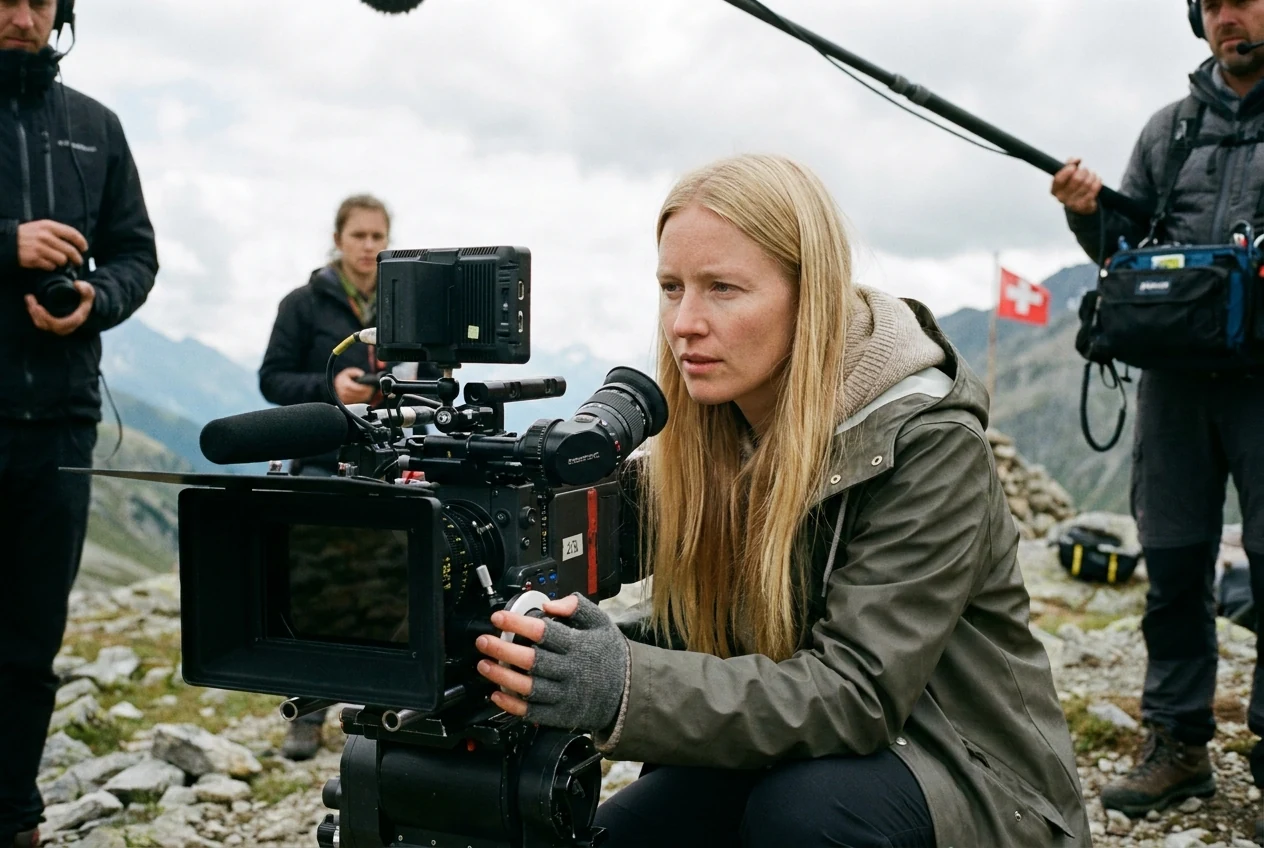
You create visual stories for film, television, and digital media.
Kameramann/-frau

01 · Overview

What this profession is about

You handle the visual design of film and TV productions. You work closely with directors and technical teams.

The camera is the eye of the production. As a Kameramann/-frau, you shape images, light, and color for cinema, television, or advertising. You plan shoots, coordinate with directors, and operate complex equipment. In journalism, you often work in small teams. This job requires creativity, technical understanding, and flexibility with irregular hours.

FieldCulture & Media
Education pathSpecialisation / Professional Function
IndustryAudiovisual Media
Swissdoc 0.814.40.0

02 · Salary

What you can earn

MedianCHF 72'800
CHF 57'500CHF 96'486
✓ Exact salary match
Salaries reflect Swiss market data. Range covers entry to senior. Salary reference based on Camera Operator. Based on 33 observations, updated 7 months ago.

Salary by experience

60k70k80kmedian 73k80k61k79k70k77k69k0-2 yrs3-5 yrs6-8 yrs9-11 yrs12-21 yrs21+ yrs
View as table
ExperienceSalary (CHF)
0-2 yrsCHF 80'000
3-5 yrsCHF 61'250
6-8 yrsCHF 78'975
9-11 yrsCHF 70'490
12-21 yrsCHF 77'056
21+ yrsCHF 68'900

Salary trend

+21% over decade
65k70k75k80k65k70k79k2017-20192020-20222023-2025
View as table
PeriodSalary (CHF)
2017-2019CHF 65'147
2020-2022CHF 70'000
2023-2025CHF 78'975

Top paying industries

  • Media / Printing / PublishingCHF 71'34522 obs.
View as table
IndustrySalaryObs.
Media / Printing / PublishingCHF 71'34522

03 · Pathway

How to enter and grow

Swiss training pathway available in the full profile

  • 🎓 Diplom
  • 3 Semester, berufsbegleitend

Official education path

You complete a 3-semester, part-time diploma. It gives you the technical and creative foundation needed to start your career.

Typical training path

Diplom

Prerequisites

  • Completed vocational basic training or a university or Fachhochschule degree in a related field (photography, graphic design, media design, journalism, multimedia production, etc.)

Requirements

  • Good vision and color perception
  • Affinity for IT topics
  • Physical fitness
  • High social competence and ability to work in a team

Where this can lead

A bachelor's degree in film and video offers a solid theoretical and practical foundation for starting your career.

04 · Skills & fit

What it takes

Required skills

  • Technical understanding
  • Creative eye
  • Teamwork skills
  • Physical stamina

Personality fit

  • Swiss career path
  • Career transition
  • Professional growth

05 · Daily reality

What the work feels like

Typical day

On set, you check the camera position. You adjust the frame with the director. Together with the lighting crew, you set the light to create the right mood for the next shot.

  • You develop a dramaturgical concept with the director for the planned production.
  • You coordinate the shooting schedule with the production manager and lighting crew.
  • You assemble cameras, lenses, and lighting equipment for use on set.
  • You test new technical gear to optimize image quality during shoots.
  • You set camera positions and angles to achieve the desired image composition.
  • You shape light and color to create moods and define spaces.
  • You maintain the used equipment after shoots and fix technical faults.

Working conditions

You work on location, in studios, or in television journalism. You often travel with small production teams and move between different sites.

Strengths

  • Technical understanding
  • Creative eye
  • Teamwork skills
  • Physical stamina

Trade-offs

  • Irregular working hours
  • Freelance uncertainty
  • Multifunctional demands
  • Physical strain

06 · Similar

You might also explore

All in Culture & Media