Culture & Media

Moderator/in bei Radio/Fernsehen

You guide your audience through radio and television programmes.
Moderator/in bei Radio/Fernsehen

01 · Overview

What this profession is about

You produce live and recorded programmes. You write scripts, lead discussions, and present on location or in the studio.

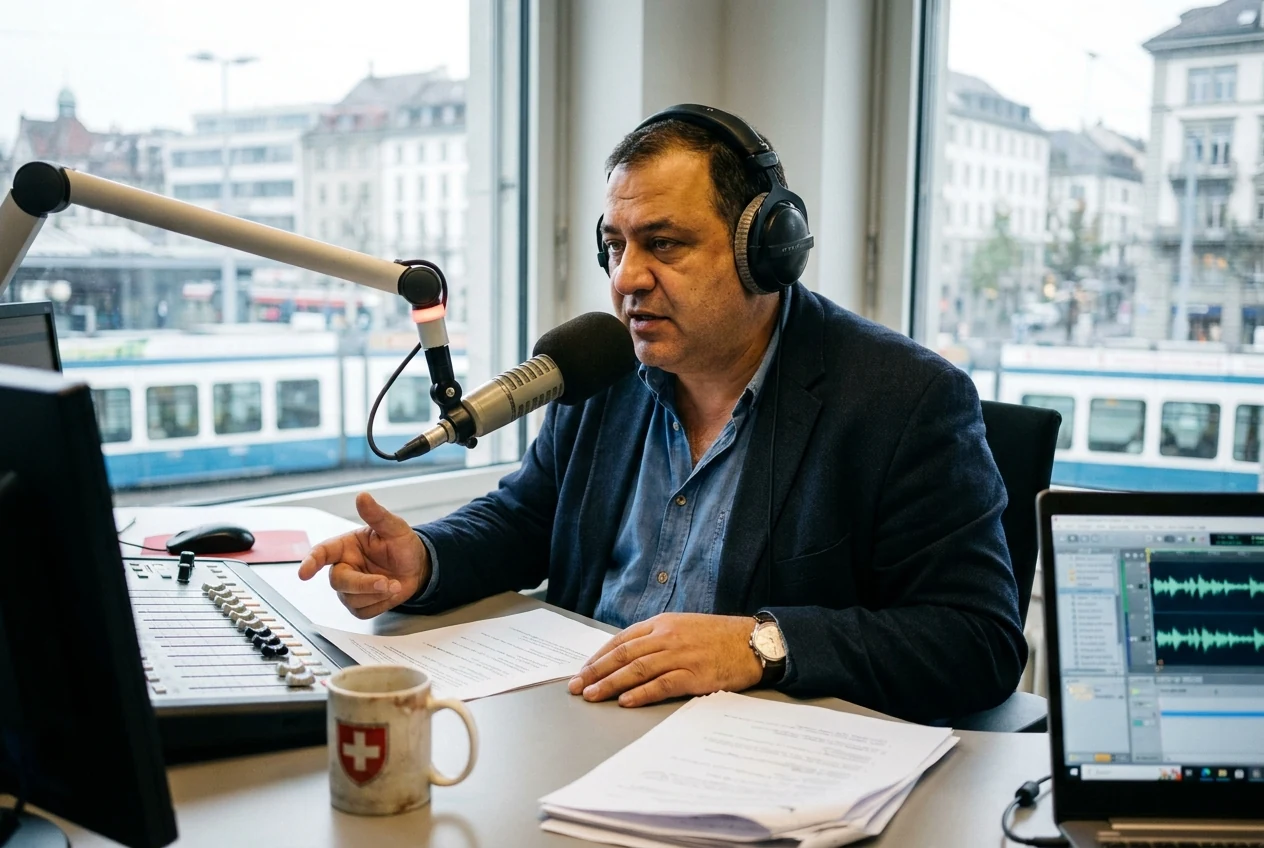
As Moderator/in bei Radio/Fernsehen, you guide your audience through the programme. You write your own scripts, make connections, and lead conversations. Whether in the studio or on location, you ensure a smooth flow. You also adapt flexibly to changing broadcast times. Your voice and presence are just as important as your journalistic experience.

FieldCulture & Media
Education pathSpecialisation / Professional Function
IndustryJournalism & Editing
Swissdoc 0.814.47.0

02 · Salary

What you can earn

MedianCHF 74'250
CHF 54'500CHF 114'400
✓ Exact salary match
Salaries reflect Swiss market data. Range covers entry to senior. Salary reference based on Moderator. Based on 30 observations, updated 7 months ago.

Salary by experience

60k80k100k120kmedian 74k67k60k60k100k120k0-2 yrs3-5 yrs6-8 yrs9-11 yrs12-21 yrs
View as table
ExperienceSalary (CHF)
0-2 yrsCHF 67'167
3-5 yrsCHF 60'400
6-8 yrsCHF 60'400
9-11 yrsCHF 100'000
12-21 yrsCHF 120'000

Salary trend

-19% over decade
60k80k100k75k57k106k60k2014-20162017-20192020-20222023-2025
View as table
PeriodSalary (CHF)
2014-2016CHF 74'800
2017-2019CHF 56'661
2020-2022CHF 105'500
2023-2025CHF 60'400

Top paying industries

  • Media / Printing / PublishingCHF 68'58318 obs.
View as table
IndustrySalaryObs.
Media / Printing / PublishingCHF 68'58318

03 · Pathway

How to enter and grow

Swiss training pathway available in the full profile

  • 🎓 Ausbildungsbestätigung bzw. Diplom der genannten Schulen

Official education path

You enter this field through a completed training or a relevant diploma from the specified schools.

Typical training path

Ausbildungsbestätigung bzw. Diplom der genannten Schulen

Prerequisites

  • Very good general knowledge
  • Very good linguistic expression
  • Completed degree or comparable training
  • Solid journalistic professional experience or completed course in journalism (advantageous)

Requirements

  • Voice suitable for microphone
  • Strong teamwork skills
  • Resilience
  • Presence

Where this can lead

Career changes are possible if you have journalistic work experience, a relevant diploma, or completed further education courses.

04 · Skills & fit

What it takes

Required skills

  • Linguistic confidence
  • Presence & Voice
  • Teamwork & Resilience
  • Journalistic Care

Personality fit

  • Swiss career path
  • Career transition
  • Professional growth

05 · Daily reality

What the work feels like

Typical day

You stand in front of the microphone. You quickly check the equipment and start the introduction to the next programme. During the broadcast, you keep track of the topic. You pick up on contributions and steer the conversation to a clear conclusion.

  • You guide your audience through the programme and keep the main thread clear.
  • You write your own introductions and sign-offs for radio or television.
  • You lead discussions and ensure a smooth flow of conversation.
  • You work closely with the editorial team. You actively shape the programme content.
  • You present flexibly in the studio or report directly from the field.
  • You adapt your voice and style to your target audience.
  • You research topics and prepare contributions carefully for broadcast.

Working conditions

You work in sound studios, television entertainment centres, or at live broadcasts on location. Depending on the schedule, you switch between regular hours and night shifts.

Where to learn

Strengths

  • Linguistic confidence
  • Presence & Voice
  • Teamwork & Resilience
  • Journalistic Care

Trade-offs

  • Irregular Working Hours
  • High Time Pressure
  • Public Visibility
  • Technical Dependence

06 · Similar

You might also explore

All in Culture & Media