Education & Social Work

Psychomotoriktherapeut/in

You support children and adolescents through targeted movement and play.
Psychomotoriktherapeut/in

01 · Overview

What this profession is about

Psychomotoriktherapeut/in guide children and adolescents with movement and behavioral challenges. You support them through pedagogical and therapeutic methods.

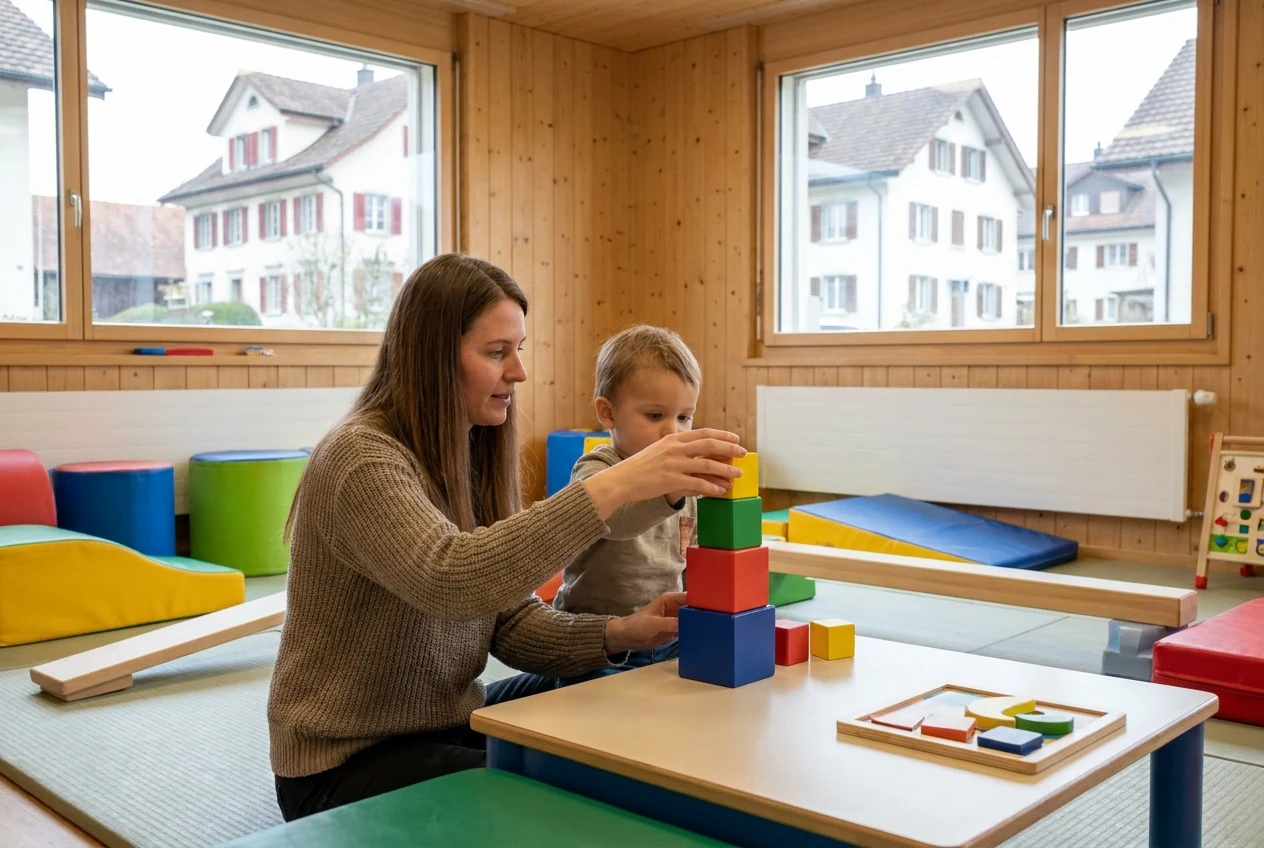
Movement is the body's language. As a Psychomotoriktherapeut/in, you use play and therapy to help children and adolescents build self-confidence. You assess their needs, create individual support plans, and work closely with teachers and parents. Together, you create spaces where development can thrive.

FieldEducation & Social Work
Education pathHigher Education Profession
IndustryMedical Therapy & Naturopathy
Swissdoc 0.731.74.0

02 · Salary

What you can earn

MedianCHF 76'800
CHF 44'400CHF 100'000
✓ Exact salary match
Salaries reflect Swiss market data. Range covers entry to senior. Salary reference based on Psychomotricity Therapist. Based on 33 observations, updated 7 months ago.

Salary by experience

60k80kmedian 77k80k69k93k75k88k56k0-2 yrs3-5 yrs6-8 yrs9-11 yrs12-21 yrs21+ yrs
View as table
ExperienceSalary (CHF)
0-2 yrsCHF 80'000
3-5 yrsCHF 69'482
6-8 yrsCHF 92'842
9-11 yrsCHF 75'000
12-21 yrsCHF 88'000
21+ yrsCHF 56'200

Salary trend

-30% over decade
80k90k100k110k108k75k88k75k2014-20162017-20192020-20222023-2025
View as table
PeriodSalary (CHF)
2014-2016CHF 108'000
2017-2019CHF 75'000
2020-2022CHF 88'000
2023-2025CHF 75'400

Top paying industries

  • EducationCHF 100'42110 obs.
  • Health care / Social servicesCHF 68'96416 obs.
View as table
IndustrySalaryObs.
EducationCHF 100'42110
Health care / Social servicesCHF 68'96416

03 · Pathway

How to enter and grow

Swiss training pathway available in the full profile

  • 🎓 Eidg. anerkannte Titel "dipl. Psychomotoriktherapeut/in (EDK)" und "Bachelor of Arts in Psychomotor Therapy" oder "Master of Science HES-SO en Psychomotricité"

Official education path

The training leads to a federally recognized title. It includes bachelor and master studies in full-time or part-time formats.

Typical training path

Eidg. anerkannte Titel "dipl. Psychomotoriktherapeut/in (EDK)" und "Bachelor of Arts in Psychomotor Therapy" oder "Master of Science HES-SO en Psychomotricité"

Prerequisites

  • EDK-anerkanntes Lehrdiplom
  • gymnasiale Maturität
  • Berufsmaturität with Ergänzungsprüfung Passerelle
  • Fachhochschulabschluss
  • Eignungs- bzw. Aufnahmeprüfung (e.g. assessment of interests, motivation, movement experience)
  • Minimum 3-month pre-internship for persons without a Lehrdiplom
  • BA degree in a related field for admission to the MA program

Requirements

  • Interest in child development
  • Willingness for self-reflection
  • Joy in movement
  • Empathy
  • Communication skills

04 · Skills & fit

What it takes

Required skills

  • Focus on development
  • Creative method selection
  • Team-oriented collaboration
  • Self-reflection

Personality fit

  • Swiss career path
  • Career transition
  • Professional growth

05 · Daily reality

What the work feels like

Typical day

You stand in a specially equipped therapy room and prepare materials like foam blocks and ropes. Together with a child, you explore new movement options through play. You also reflect on the emotions they experience.

  • You conduct specialized assessments to track developmental progress accurately.
  • You plan individual therapy goals based on tests and observations.
  • You guide children through play in individual sessions or small groups.
  • You use materials like ropes and climbing towers to create new sensory experiences.
  • You boost self-esteem through positive movement experiences.
  • You regularly exchange ideas with teachers and parents.
  • You carefully write therapy reports and administrative documents.

Working conditions

You work mainly in schools, kindergartens, or special needs schools. Occasionally, you also work in pedagogical-therapeutic services or in your own practice.

Where to learn

Strengths

  • Focus on development
  • Creative method selection
  • Team-oriented collaboration
  • Self-reflection

Trade-offs

  • Emotional strain
  • Administrative effort
  • Spatial planning
  • Limits of impact

06 · Similar

You might also explore

All in Education & Social Work