Textiles & Fashion

Schuhmacher/in EFZ

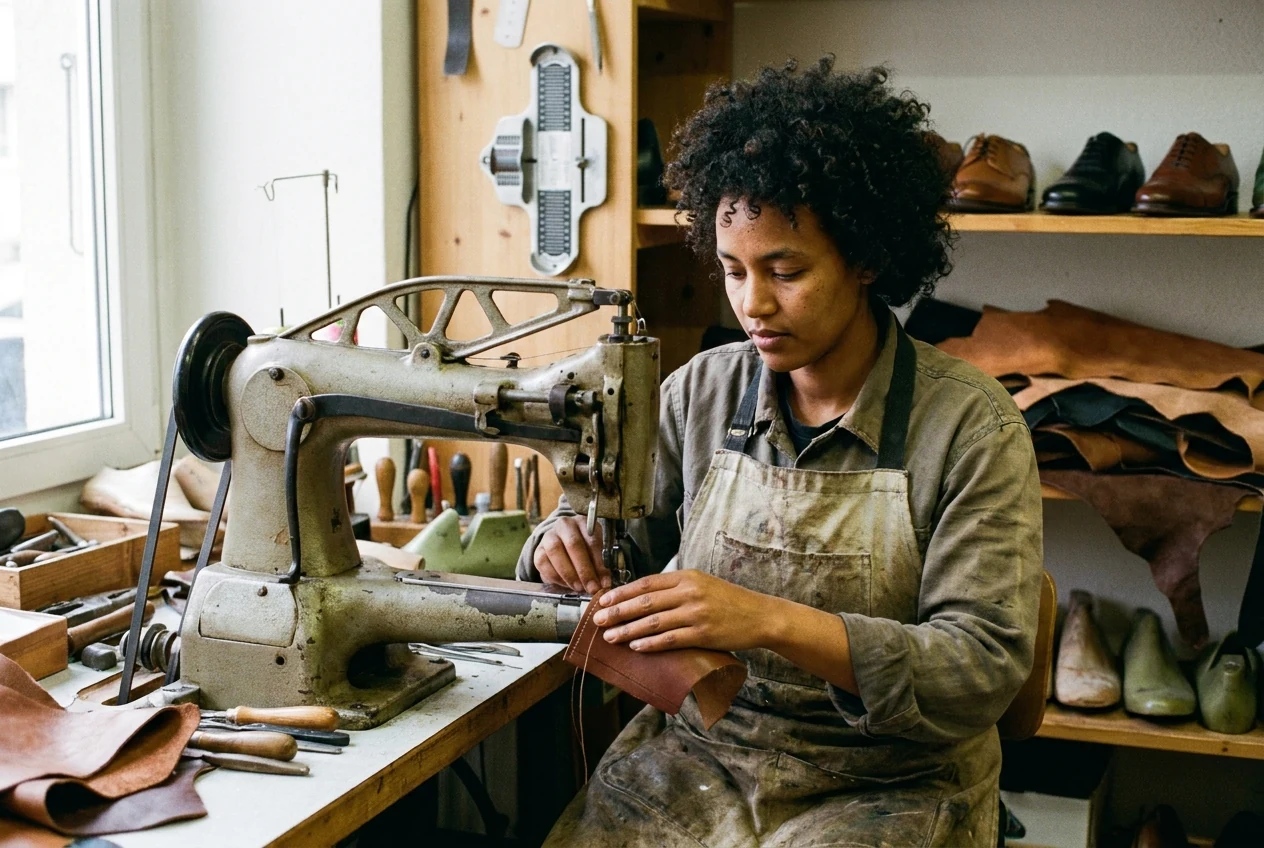
You repair shoes and craft individual leather goods with great skill.
Schuhmacher/in EFZ

01 · Overview

What this profession is about

Schuhmacher/in EFZ repair shoes, make orthopaedic adjustments, and advise customers professionally.

In your workshop, you turn worn shoes back into reliable companions. With great skill and expertise, you replace soles, seams, and heels. You advise customers individually on care and repairs. You make orthopaedic adjustments and maintain your machines yourself. This profession combines traditional craftsmanship with modern customer advice and leaves room for creative ideas.

FieldTextiles & Fashion
Education pathVocational Training (Apprenticeship)
IndustryFashion & Apparel
Swissdoc 0.330.9.0

02 · Salary

What you can earn

MedianCHF 61'900
CHF 44'000CHF 70'000
✓ Exact salary match
Salaries reflect Swiss market data. Range covers entry to senior. Salary reference based on Shoemaker. Based on 14 observations, updated 7 months ago.

Salary by experience

60k65kmedian 62k58k67k64k64k0-2 yrs3-5 yrs12-21 yrs21+ yrs
View as table
ExperienceSalary (CHF)
0-2 yrsCHF 58'000
3-5 yrsCHF 67'416
12-21 yrsCHF 64'200
21+ yrsCHF 64'000

Salary trend

+5% over decade
40k50k60k64k42k67k2017-20192020-20222023-2025
View as table
PeriodSalary (CHF)
2017-2019CHF 64'000
2020-2022CHF 41'768
2023-2025CHF 67'416

Top paying industries

  • Commercial operation / Skilled craftsCHF 62'7086 obs.
View as table
IndustrySalaryObs.
Commercial operation / Skilled craftsCHF 62'7086

03 · Pathway

How to enter and grow

  • 🎓 Schuhmacher/in EFZ
  • 3 Jahre

Official education path

The training lasts three years and combines practical work in a shoe workshop with weekly classes at the vocational school.

Typical training path

Schuhmacher/in EFZ

Curriculum

  • Handwerk und Technologie
  • Kundenberatung
  • Arbeitssicherheit
  • Gesundheitsschutz
  • Umweltschutz
  • Werterhaltung

Prerequisites

  • obligatorische Schule abgeschlossen

Requirements

  • manual dexterity
  • good sense of materials
  • sense of forms and colours
  • careful working style
  • good interpersonal skills
  1. 1Handwerk und Technologie
  2. 2Kundenberatung
  3. 3Arbeitssicherheit
  4. 4Gesundheitsschutz
  5. 5Umweltschutz
  6. 6Werterhaltung

Where this can lead

A lateral entry is often possible through a shortened apprenticeship as an Orthopädieschuhmacher/in or via related further training courses.

04 · Skills & fit

What it takes

Required skills

  • Manual dexterity
  • Sense of form
  • Careful working style
  • Customer focus

Personality fit

  • Swiss career path
  • Career transition
  • Professional growth

05 · Daily reality

What the work feels like

Typical day

You stand at your workbench and carefully check the condition of a worn shoe. Then you choose the right material and start the professional repair.

  • You professionally replace toe caps, soles, and heels to ensure a secure fit.
  • You repair the upper leather and replace damaged eyelets or zippers.
  • You adjust orthopaedic heels to balance different leg lengths or poor posture.
  • You maintain your grinding machines and sewing equipment yourself to keep the workshop running smoothly.
  • You advise customers on proper shoe care and sell suitable care products.
  • You also craft individual leather goods or keychains as a side activity if needed.

Working conditions

You usually work alone in small shoe workshops or in larger companies with colleagues. Your working hours follow the shop's opening times.

Strengths

  • Manual dexterity
  • Sense of form
  • Careful working style
  • Customer focus

Trade-offs

  • Physical strain
  • Fewer repair orders
  • Material costs
  • Working alone

06 · Similar

You might also explore

All in Textiles & Fashion