Salary by experience
View as table
| Experience | Salary (CHF) |
|---|---|
| 0-2 yrs | CHF 62'760 |
| 3-5 yrs | CHF 67'050 |
| 6-8 yrs | CHF 75'600 |
| 9-11 yrs | CHF 85'050 |
| 12-21 yrs | CHF 61'500 |
| 21+ yrs | CHF 99'750 |
You accompany people with horse-assisted therapies on their path
01 · Overview
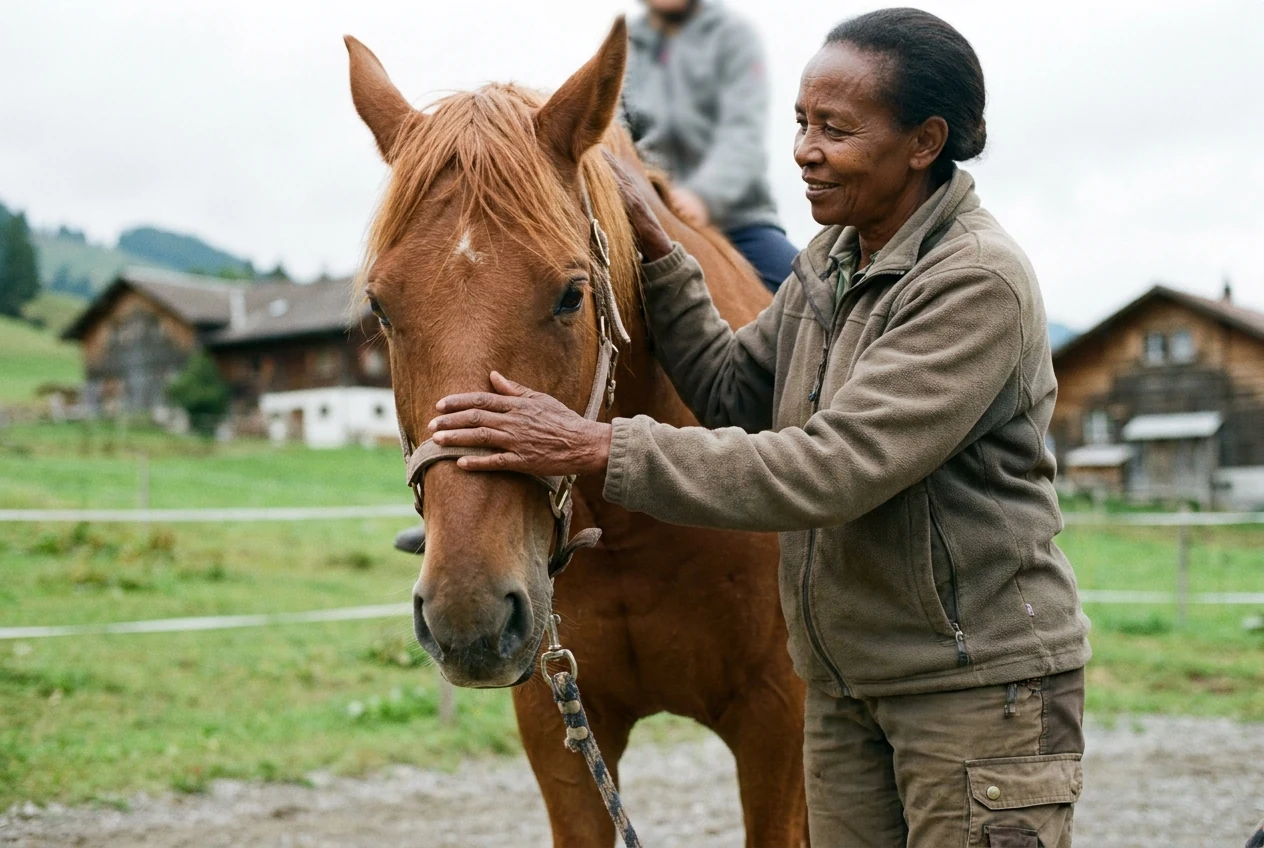
Reittherapeutinnen and Reittherapeuten use work with horses to support people in difficult life situations.
In Reittherapie, you combine animal-assisted methods with psychological expertise. You accompany people after accidents, during periods of grief, or with psychosomatic complaints. Through contact with the animals, you promote self-confidence, movement, and emotional stability. Your work requires empathy, patience, and solid training. You create a protected space where therapy and nature meet.
02 · Salary
| Experience | Salary (CHF) |
|---|---|
| 0-2 yrs | CHF 62'760 |
| 3-5 yrs | CHF 67'050 |
| 6-8 yrs | CHF 75'600 |
| 9-11 yrs | CHF 85'050 |
| 12-21 yrs | CHF 61'500 |
| 21+ yrs | CHF 99'750 |
| Period | Salary (CHF) |
|---|---|
| 2017-2019 | CHF 46'667 |
| 2020-2022 | CHF 84'000 |
| 2023-2025 | CHF 69'000 |
| Industry | Salary | Obs. |
|---|---|---|
| Health care / Social services | CHF 67'761 | 14 |
03 · Pathway
Swiss training pathway available in the full profile
The training is part-time and includes theoretical and practical modules up to a diploma thesis.
Reittherapeut/in
Lateral entry is possible if you have related health or equestrian training.
04 · Skills & fit
05 · Daily reality
You stand in the riding arena and give gentle cues while the client sits on the horse. Together you observe the animal's body language and adapt the therapy exercises flexibly.
You work in riding therapy centres, on farms, or in outpatient facilities.
06 · Similar