Culture & Media

Sänger/in

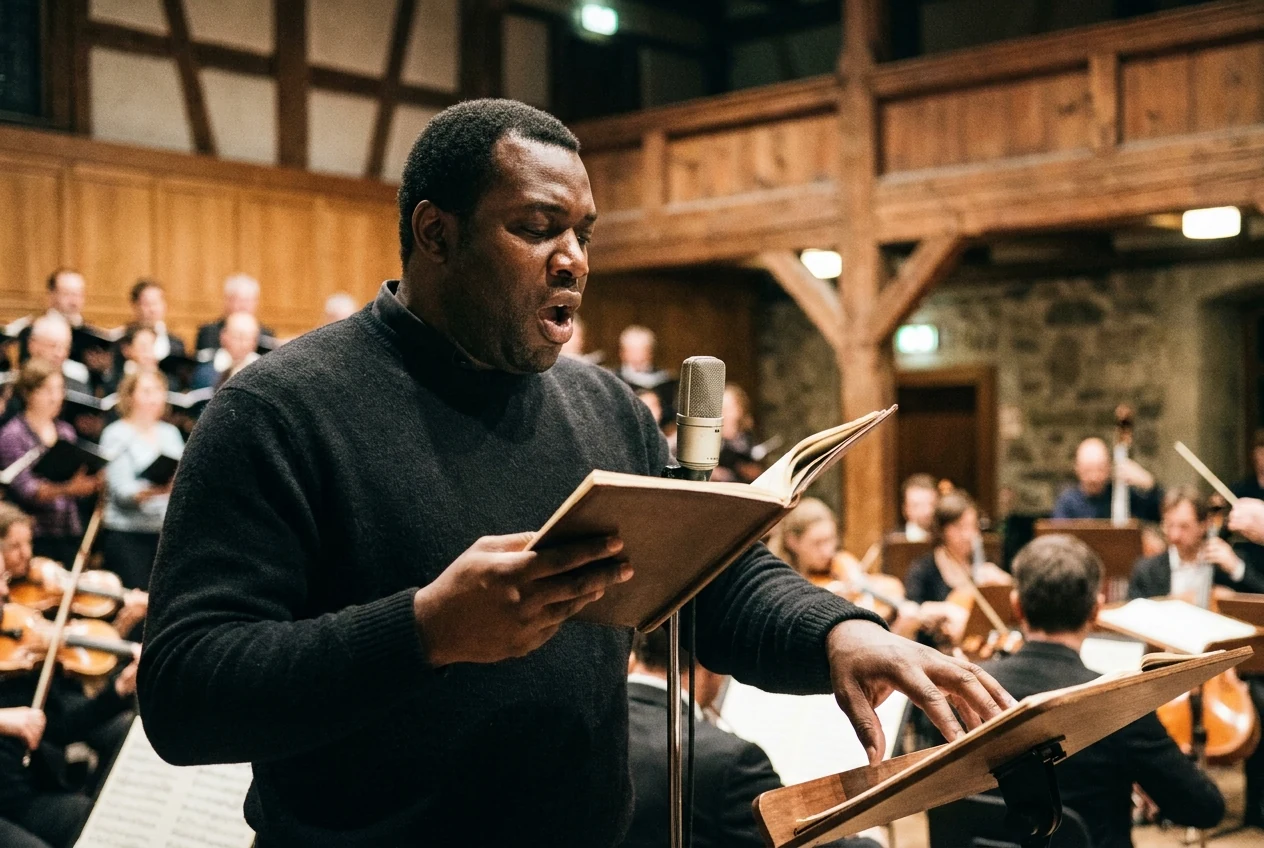
You use your voice as an instrument and captivate the audience on stage.
Sänger/in

01 · Overview

What this profession is about

Sänger/in shape vocal performances in opera, church, or concert halls, and care for your voice daily.

Your voice is your instrument. As Sänger/in, you guide the audience through emotional soundscapes. Whether as a soloist in opera, in a choir, or on large festival stages: you carefully prepare new works and care for your vocal range daily. With endurance and artistic expression, you turn sheet music into living music.

FieldCulture & Media
Education pathSpecialisation / Professional Function
IndustryTheatre, Music, Dance & Film
Swissdoc 0.824.25.0 - 0.824.25.8

02 · Salary

What you can earn

No verified Swiss salary data is available for this profession yet.
Salaries reflect Swiss market data. Range covers entry to senior. Salary reference based on Sänger/in.

03 · Pathway

How to enter and grow

Swiss training pathway available in the full profile

  • 🎓 Sänger/in

Official education path

Training usually takes place through specialized singing courses, private teachers, or art schools.

Typical training path

Sänger/in

Prerequisites

  • Study with a freelance singing teacher

Requirements

  • Stable and resonant voice
  • Above-average musicality
  • Artistic expression and design ability
  • Acting talent (for opera, musical)
  • Endurance and perseverance
  • Good physical condition

Where this can lead

A career change is often possible through related art studies or intensive private singing training.

04 · Skills & fit

What it takes

Required skills

  • Stable vocal range
  • Artistic expression
  • Musical discipline
  • Physical endurance

Personality fit

  • Swiss career path
  • Career transition
  • Professional growth

05 · Daily reality

What the work feels like

Typical day

You stand before the piano accompaniment and tune your score. With targeted breathing exercises and careful study of the notes, you prepare for your next performance.

  • You use your voice as a central musical instrument for different vocal ranges.
  • You carefully study scores and care for your vocal range daily.
  • You perform as a soloist or in a choir before an audience.
  • You shape vocal works in opera, church, or on festival stages.
  • You study musical structures and develop your expression.
  • You adapt your technique to different styles and repertoires.

Working conditions

You work in concert halls, theaters, opera houses, churches, or on open festival stages. Your workplace changes from rehearsal rooms to performance venues depending on the project.

Strengths

  • Stable vocal range
  • Artistic expression
  • Musical discipline
  • Physical endurance

Trade-offs

  • Intensive rehearsal time
  • Competitive pressure
  • Irregular hours
  • Physical strain

06 · Similar

You might also explore

All in Culture & Media