Healthcare

Sterbebegleiter/in

You accompany dying people on their last journey with care and calm.
Sterbebegleiter/in

01 · Overview

What this profession is about

Sterbebegleiter/in listen, comfort and accompany dying people and their families in hospitals, care homes or at home.

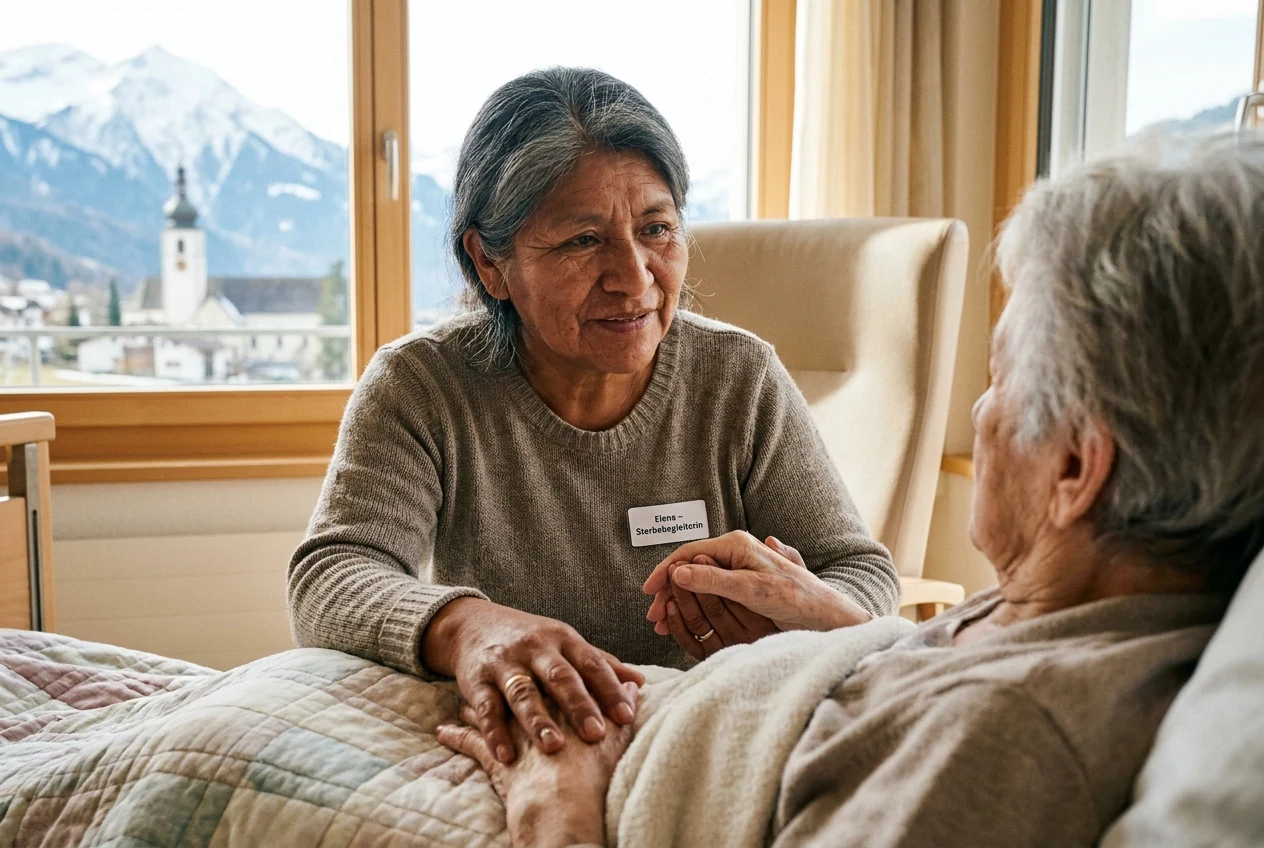
Saying goodbye is a deep moment that needs support. Sterbebegleiter/in take on this task. You give dying people time, attention and human closeness. Whether in hospital, in a care home or at home: your quiet presence gives security. This work requires much empathy and inner strength. You make the last chapter of life dignified and human.

FieldHealthcare
Education pathSpecialisation / Professional Function
IndustryAccompaniment & Support
Swissdoc 0.722.48.0

02 · Salary

What you can earn

No verified Swiss salary data is available for this profession yet.
Salaries reflect Swiss market data. Range covers entry to senior. Salary reference based on Sterbebegleiter/in.

Salary by experience

80k90k100k100k80k101k107k0-2 yrs3-5 yrs9-11 yrs12-21 yrs
View as table
ExperienceSalary (CHF)
0-2 yrsCHF 100'000
3-5 yrsCHF 80'000
9-11 yrsCHF 101'000
12-21 yrsCHF 106'850

Salary trend

+11% over decade
100k105k96k106k2017-20192023-2025
View as table
PeriodSalary (CHF)
2017-2019CHF 96'000
2023-2025CHF 106'425

Top paying industries

  • Health care / Social servicesCHF 100'0005 obs.
View as table
IndustrySalaryObs.
Health care / Social servicesCHF 100'0005

03 · Pathway

How to enter and grow

Swiss training pathway available in the full profile

  • 🎓 Sterbebegleiter/in

Official education path

You gain the qualification through various course offers. Institutions offer these to professionals or laypeople.

Typical training path

Sterbebegleiter/in

Prerequisites

  • Resilience
  • Interest in and openness to life questions
  • Psychological skill
  • Knowledge of the dying process

Requirements

  • Interest in and openness to existential questions

04 · Skills & fit

What it takes

Required skills

  • Emotional stability
  • Openness to life questions
  • Psychological sensitivity
  • Knowledge of the dying process

Personality fit

  • Swiss career path
  • Career transition
  • Professional growth

05 · Daily reality

What the work feels like

Typical day

You sit by the bed of a dying person. You listen to their stories and hold their hand. Sometimes you take the person for a short walk in the garden. You give them a few quiet moments.

  • You take time for conversations. You listen to the worries of dying people.
  • You hold the hands of dying people. You give them physical closeness and comfort.
  • You accompany people on short walks. You give them last experiences.
  • You work closely with nursing staff. You ensure well-being in the final phase.
  • You reflect on your own feelings about death. You stay open and aware.

Working conditions

You work in hospitals, care homes and hospices. You also accompany people in their own homes.

Strengths

  • Emotional stability
  • Openness to life questions
  • Psychological sensitivity
  • Knowledge of the dying process

Trade-offs

  • Emotional exhaustion
  • Irregular hours
  • High responsibility
  • Lack of standardization

06 · Similar

You might also explore

All in Healthcare