Healthcare

Facharzt/-ärztin für Orthopädische Chirurgie und Traumatologie des Bewegungsapparats

You treat injuries and diseases of the musculoskeletal system
Facharzt/-ärztin für Orthopädische Chirurgie und Traumatologie des Bewegungsapparats

01 · Overview

What this profession is about

You diagnose bone fractures and joint problems. You perform surgeries. You plan follow-up care for patients.

Bone fractures, joint wear or congenital defects: As Facharzt/-ärztin für Orthopädische Chirurgie und Traumatologie des Bewegungsapparats, you make complex diagnoses. You operate with precision. You adjust implants. You accompany patients on the long road to full recovery. Your work combines medical expertise with careful planning. You provide long-term care for all age groups.

FieldHealthcare
Education pathHigher Education Profession
IndustryMedical & Scientific Roles
Swissdoc 0.724.10.47

02 · Salary

What you can earn

No verified Swiss salary data is available for this profession yet.
Salaries reflect Swiss market data. Range covers entry to senior. Salary reference based on Facharzt/-ärztin für Orthopädische Chirurgie und Traumatologie des Bewegungsapparats.

Salary by experience

50k100k62k40k66k121k3-5 yrs6-8 yrs9-11 yrs12-21 yrs
View as table
ExperienceSalary (CHF)
3-5 yrsCHF 62'075
6-8 yrsCHF 40'000
9-11 yrsCHF 66'126
12-21 yrsCHF 121'050

Salary trend

-6% over decade
56k58k59k55k2020-20222023-2025
View as table
PeriodSalary (CHF)
2020-2022CHF 59'150
2023-2025CHF 55'350

03 · Pathway

How to enter and grow

Swiss training pathway available in the full profile

  • 🎓 Fachärztin/zum Facharzt für Orthopädische Chirurgie und Traumatologie des Bewegungsapparats

Official education path

The path leads through specialised postgraduate training after your initial medical education.

Typical training path

Fachärztin/zum Facharzt für Orthopädische Chirurgie und Traumatologie des Bewegungsapparats

Prerequisites

  • Master Universitäre Hochschule
  • 6-jährige Ausbildung zur Fachärztin/zum Facharzt für Orthopädische Chirurgie und Traumatologie des Bewegungsapparats

Requirements

  • Analytical skills
  • Networked thinking and action
  • Strong sense of responsibility
  • Communication skills
  • Careful working style
  • Reliability
  • Clean working methods and sense of hygiene

04 · Skills & fit

What it takes

Required skills

  • Analytical skills
  • Networked thinking
  • Sense of responsibility
  • Communication skills
  • Careful working style

Personality fit

  • Swiss career path
  • Career transition
  • Professional growth

05 · Daily reality

What the work feels like

Typical day

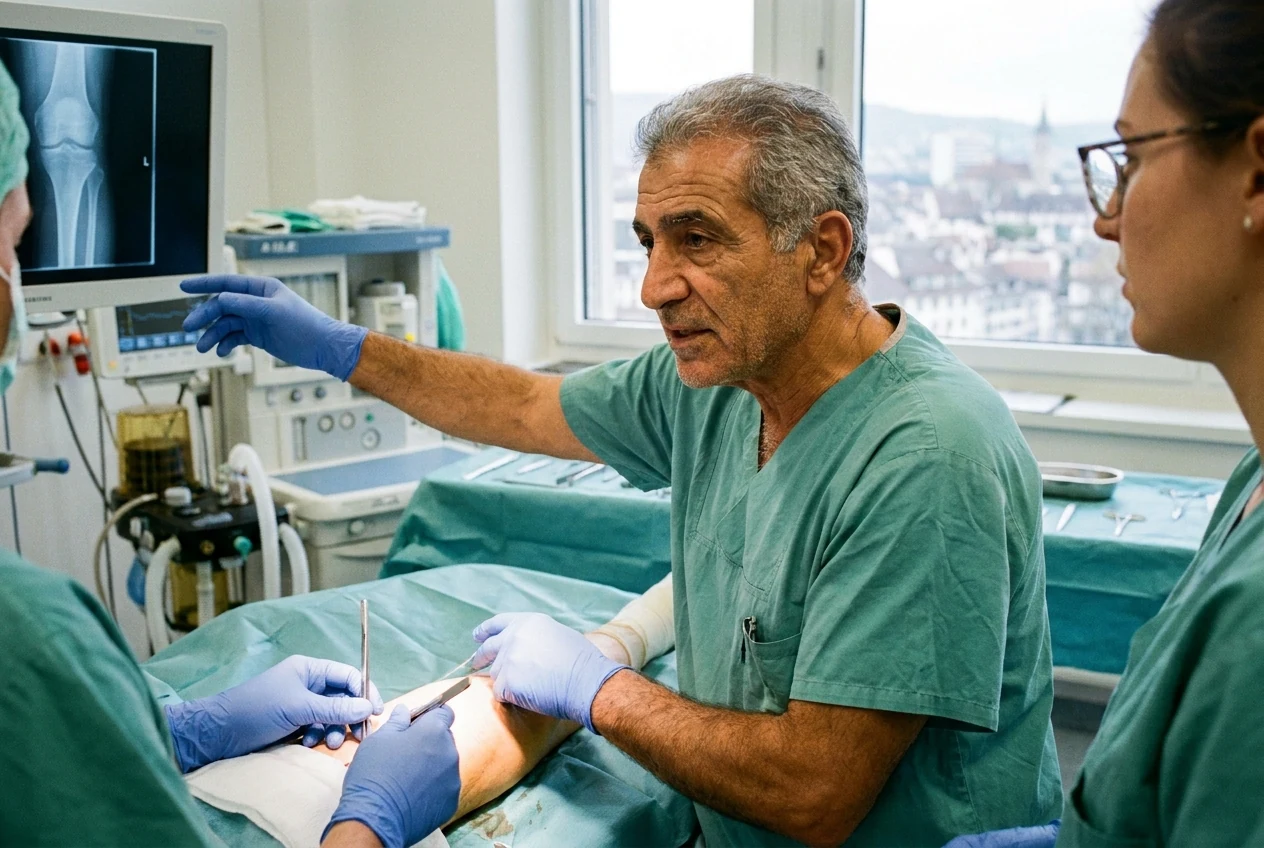
You stand in the operating room. You prepare the instruments for a joint surgery. Then you discuss the next steps for rehabilitation with the treatment team.

  • You perform clinical examinations. You make precise diagnoses.
  • You operate on bone fractures. You transplant cartilage tissue with great care.
  • You adjust prostheses and orthoses to individual needs.
  • You plan preventive measures. You coordinate long-term follow-up care.
  • You prescribe non-surgical therapies. You monitor the healing process.
  • You also consider the social environment during treatment.

Working conditions

You work in hospitals, trauma clinics or specialised orthopaedic practices. Your workplace is usually the operating room, the examination rooms or the rehabilitation department.

Strengths

  • Analytical skills
  • Networked thinking
  • Sense of responsibility
  • Communication skills
  • Careful working style

Trade-offs

  • High responsibility
  • Physical strain
  • Emotional demands
  • Planning effort

06 · Similar

You might also explore

All in Healthcare