Salary by experience
View as table
| Experience | Salary (CHF) |
|---|---|
| 0-2 yrs | CHF 75'300 |
| 3-5 yrs | CHF 85'000 |
| 6-8 yrs | CHF 75'832 |
| 9-11 yrs | CHF 82'437 |
| 12-21 yrs | CHF 87'300 |
| 21+ yrs | CHF 100'271 |
You treat movement disorders using targeted physical stimuli.
01 · Overview
Bobath-Therapeut/in relieve central nervous system disorders in children and adults. You use manual therapy and targeted movement impulses.
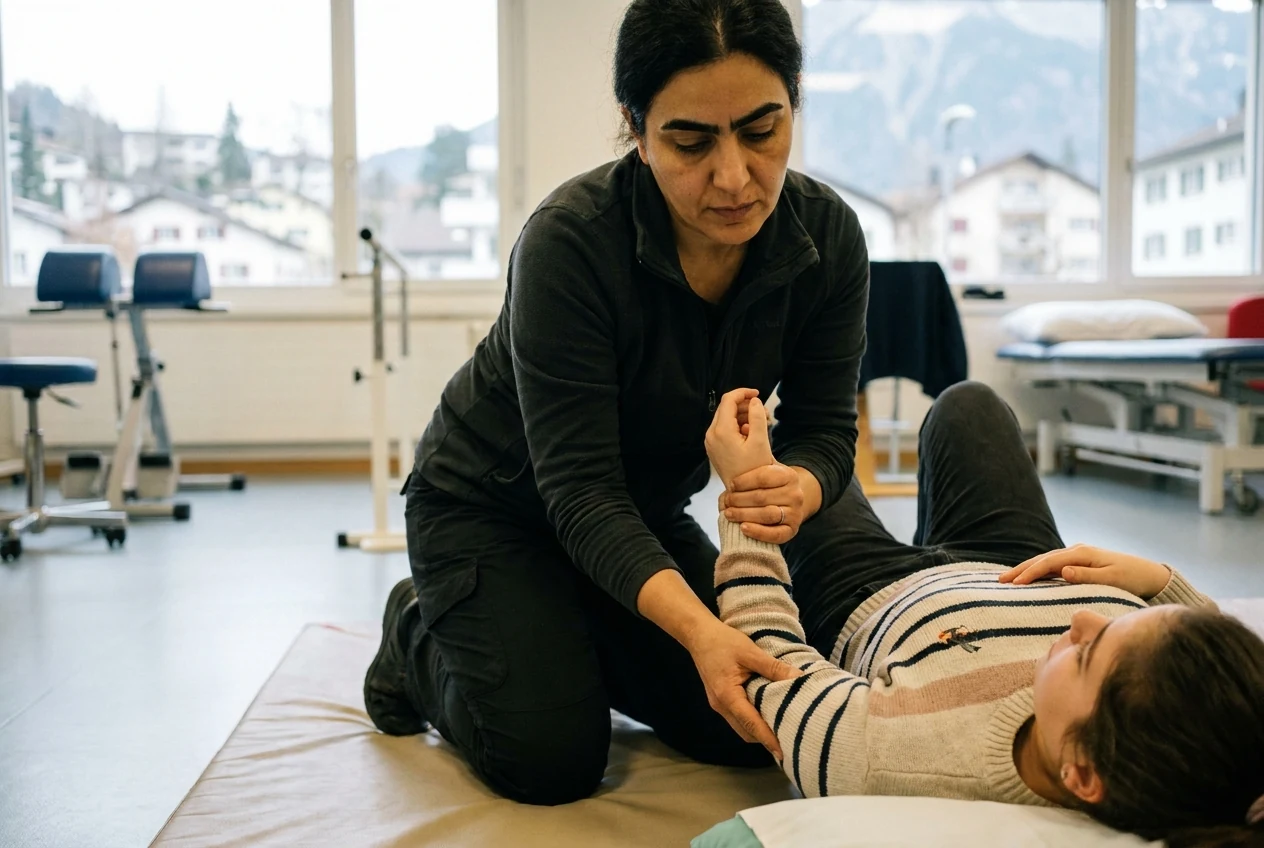
You work directly on the body to improve movement patterns. Bobath-Therapeut/in treat patients of all ages with central nervous system disorders. You use targeted pressure, traction, and touch to block pathological patterns. This creates the foundation for natural movement. The job requires great sensitivity, analytical thinking, and constant adaptation to individual patient needs.
02 · Salary
| Experience | Salary (CHF) |
|---|---|
| 0-2 yrs | CHF 75'300 |
| 3-5 yrs | CHF 85'000 |
| 6-8 yrs | CHF 75'832 |
| 9-11 yrs | CHF 82'437 |
| 12-21 yrs | CHF 87'300 |
| 21+ yrs | CHF 100'271 |
| Period | Salary (CHF) |
|---|---|
| 2014-2016 | CHF 51'667 |
| 2017-2019 | CHF 75'000 |
| 2020-2022 | CHF 85'153 |
| 2023-2025 | CHF 86'180 |
| Industry | Salary | Obs. |
|---|---|---|
| Health care / Social services | CHF 83'437 | 28 |
03 · Pathway
Swiss training pathway available in the full profile
Training is provided through specialized continuing education courses at universities or professional associations.
Bobath-Therapeut/in
04 · Skills & fit
05 · Daily reality
You stand beside the treatment table. You apply targeted pressure to the patient's shoulder with your hands. At the same time, you use gentle impulses to relax the muscles and correct the posture.
You typically work in outpatient clinics, hospitals, or rehabilitation centers. Treatment usually takes place in direct contact with the patient.
06 · Similar