Salary by experience
View as table
| Experience | Salary (CHF) |
|---|---|
| 0-2 yrs | CHF 80'000 |
| 3-5 yrs | CHF 45'000 |
| 6-8 yrs | CHF 74'000 |
| 9-11 yrs | CHF 129'000 |
| 12-21 yrs | CHF 129'073 |
| 21+ yrs | CHF 122'325 |
You safely guide travellers through the daily station routine.
01 · Overview
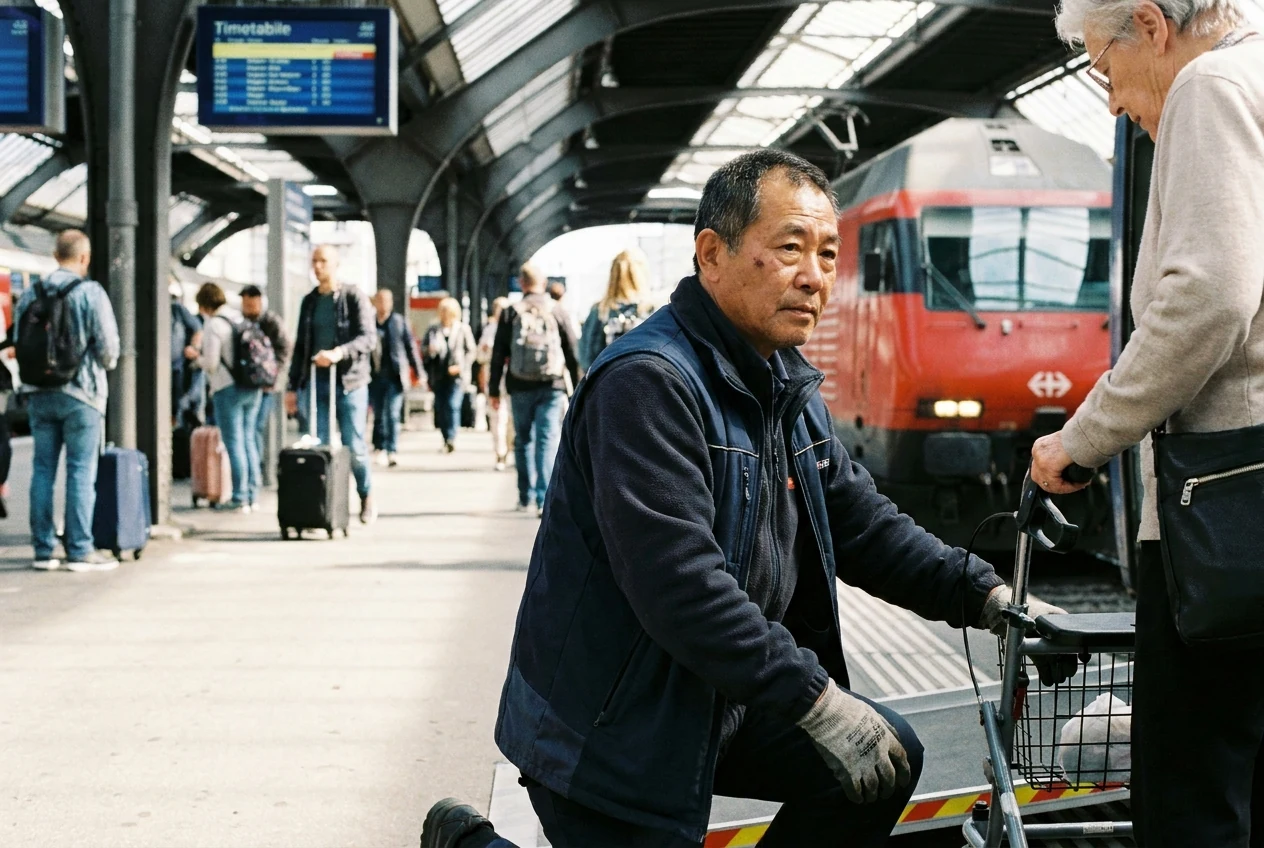
Bahnhofhelfer/in support travellers and people in need of assistance with navigation in the station and to their connections.
The station is a busy hub where thousands of people start or end their journeys every day. As Bahnhofhelfer/in, you play a key role here. You ensure smooth operations. You also offer valuable support to people with mobility issues or older travellers. Your work makes public transport accessible and safe for everyone.
02 · Salary
| Experience | Salary (CHF) |
|---|---|
| 0-2 yrs | CHF 80'000 |
| 3-5 yrs | CHF 45'000 |
| 6-8 yrs | CHF 74'000 |
| 9-11 yrs | CHF 129'000 |
| 12-21 yrs | CHF 129'073 |
| 21+ yrs | CHF 122'325 |
| Period | Salary (CHF) |
|---|---|
| 2014-2016 | CHF 45'000 |
| 2017-2019 | CHF 103'150 |
| 2020-2022 | CHF 129'073 |
| 2023-2025 | CHF 88'000 |
03 · Pathway
Swiss training pathway available in the full profile
Training happens through on-the-job instruction and specific station courses. It does not follow a classic apprenticeship path.
Bahnhofhelfer/in
A career change is often possible. You can apply if you have worked in service or care before. You also need some initial work experience.
04 · Skills & fit
05 · Daily reality
You stand at the platform edge. You wait for the arriving train. At the same time, you prepare a platform lift for a wheelchair user. As soon as the doors open, you guide the person safely on board. After the train leaves, you quickly check the next connection for the next traveller who needs help.
You work mainly at larger stations and nearby transport hubs. Your workplace changes between platforms, waiting areas, and connections to buses, trams, or taxis.
06 · Similar