Textiles & Fashion

Textiltechnologe/-login EFZ

You design modern textiles and operate highly automated production systems
Textiltechnologe/-login EFZ

01 · Overview

What this profession is about

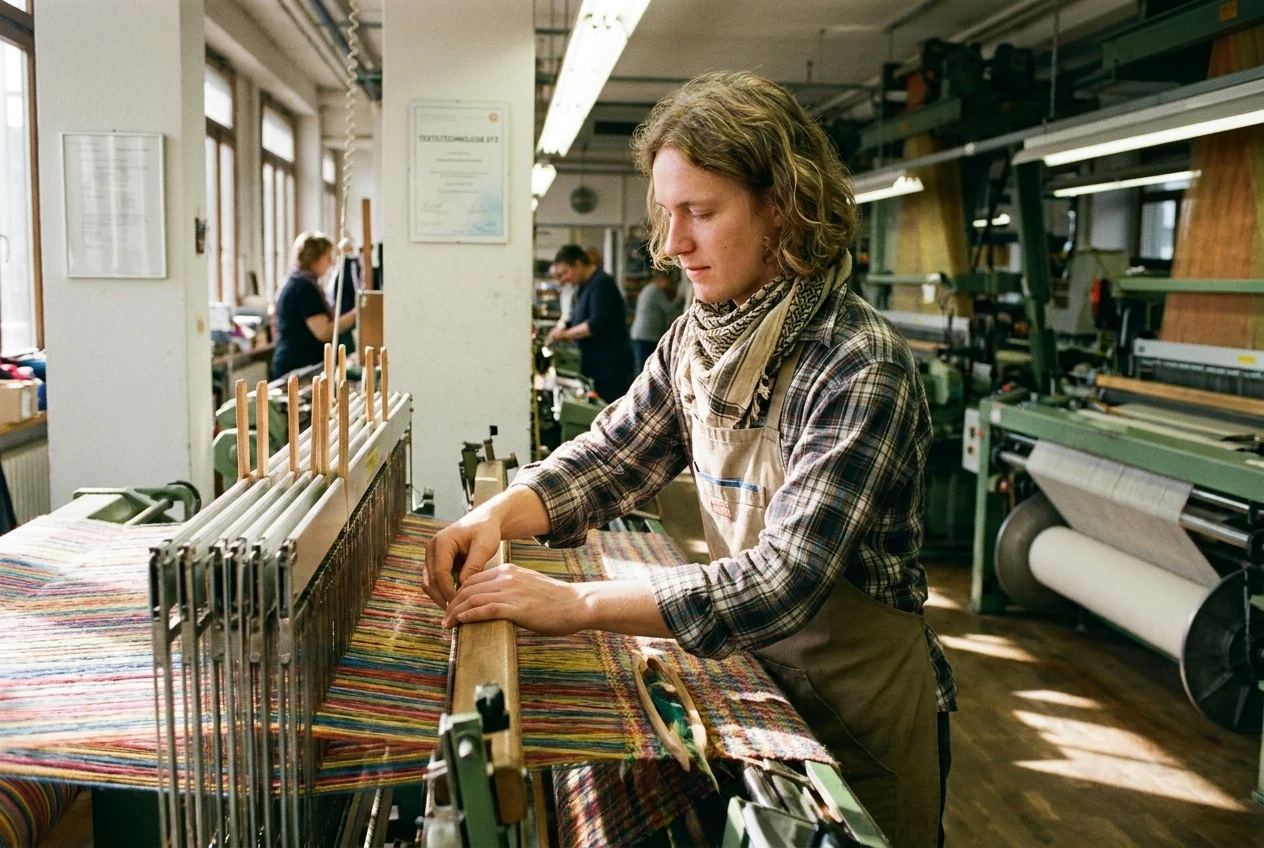
Textiltechnologe/-login EFZ develop fabric designs, monitor production processes, and maintain highly automated machines in the textile industry.

The modern textile industry relies on innovation and precision. As a Textiltechnologe/-login EFZ, you combine creative design with technical expertise. You prepare digital patterns, monitor complex production lines, and ensure flawless quality standards. Whether in the lab or at the machine: your knowledge secures value creation in a traditional yet highly modern sector.

FieldTextiles & Fashion
Education pathVocational Training (Apprenticeship)
IndustryDesign
Swissdoc 0.310.13.0

02 · Salary

What you can earn

MedianCHF 84'500
CHF 60'000CHF 116'053
✓ Strong salary match
Salaries reflect Swiss market data. Range covers entry to senior. Salary reference based on Textile Engineer. Based on 16 observations, updated 7 months ago.

Salary by experience

50k100kmedian 85k85k83k50k60k121k113k0-2 yrs3-5 yrs6-8 yrs9-11 yrs12-21 yrs21+ yrs
View as table
ExperienceSalary (CHF)
0-2 yrsCHF 84'500
3-5 yrsCHF 83'200
6-8 yrsCHF 50'400
9-11 yrsCHF 60'000
12-21 yrsCHF 121'000
21+ yrsCHF 113'026

Salary trend

-21% over decade
70k80k85k75k67k2014-20162017-20192023-2025
View as table
PeriodSalary (CHF)
2014-2016CHF 84'500
2017-2019CHF 74'964
2023-2025CHF 66'800

Top paying industries

  • Industry variousCHF 80'0006 obs.
View as table
IndustrySalaryObs.
Industry variousCHF 80'0006

03 · Pathway

How to enter and grow

  • 🎓 Textiltechnologe/-login EFZ
  • 3 Jahre

Official education path

The training is a three-year apprenticeship with weekly vocational school classes.

Typical training path

Textiltechnologe/-login EFZ

Curriculum

  • Planen und Vorbereiten der Arbeiten für Prozesse der Textilproduktion
  • Analysieren und Prüfen von Materialien für Prozesse der Textilproduktion
  • Durchführen von Prozessen der Textilproduktion
  • Entwickeln des Designs und technisches Umsetzen (Design)
  • Produzieren von Garnen oder Flächengebilden (Herstellung)
  • Veredeln
  • Textiler Erzeugnisse (Veredlung)
  • Herstellen und Verarbeiten von Seilen (Seil- und Hebetechnik)
  • Warten und Instandhalten der Maschinen und Anlagen (Mechatronik)

Prerequisites

  • obligatorische Schule abgeschlossen

Requirements

  • handwerkliches Geschick
  • technisches Verständnis
  • Sinn für Farben und Formen
  • Kreativität
  • Kommunikationsfähigkeit
  • exakte Arbeitsweise
  • Geduld und Ausdauer
  1. 1Planen und Vorbereiten der Arbeiten für Prozesse der Textilproduktion
  2. 2Analysieren und Prüfen von Materialien für Prozesse der Textilproduktion
  3. 3Durchführen von Prozessen der Textilproduktion
  4. 4Entwickeln des Designs und technisches Umsetzen (Design)
  5. 5Produzieren von Garnen oder Flächengebilden (Herstellung)
  6. 6Veredeln
  7. 7Textiler Erzeugnisse (Veredlung)
  8. 8Herstellen und Verarbeiten von Seilen (Seil- und Hebetechnik)
  9. 9Warten und Instandhalten der Maschinen und Anlagen (Mechatronik)

Where this can lead

Career changers often take further training courses at specialized schools or switch to the industry after a related initial qualification.

04 · Skills & fit

What it takes

Required skills

  • Technical understanding
  • Creative sense
  • Precision
  • Teamwork

Personality fit

  • Swiss career path
  • Career transition
  • Professional growth

05 · Daily reality

What the work feels like

Typical day

You stand at the control console of an embroidery machine and check the digital color gradients on the monitor. While the machines run, you record measurements and adjust the speed for a perfect final result.

  • You sketch textile patterns and transfer them digitally to production machines.
  • You check raw materials and prepare them for further processing.
  • You set up embroidery machines and monitor the ongoing production process.
  • You dye and finish yarns using precise chemical processes.
  • You maintain technical equipment and replace worn parts correctly.
  • You document production data and quickly fix sudden disruptions.

Working conditions

You work in production facilities, workshops, or laboratories in the textile industry. Your workplaces are mainly located in eastern Switzerland and Ticino.

Strengths

  • Technical understanding
  • Creative sense
  • Precision
  • Teamwork

Trade-offs

  • Shift work
  • Physical strain
  • Technological change
  • Relocation of workplaces

06 · Similar

You might also explore

All in Textiles & Fashion