Salary by experience
View as table
| Experience | Salary (CHF) |
|---|---|
| 0-2 yrs | CHF 149'494 |
| 3-5 yrs | CHF 148'235 |
| 6-8 yrs | CHF 136'000 |
| 9-11 yrs | CHF 163'550 |
| 12-21 yrs | CHF 175'000 |
| 21+ yrs | CHF 165'000 |
You decide on guilt and punishment in Swiss criminal law.
01 · Overview
As a member of the criminal court, you examine evidence and issue legally sound verdicts.
In the Swiss justice system, you play a central role in the judiciary. As a member of the criminal court, you review complex criminal cases. You lead hearings and make important decisions. Your daily work requires solid legal knowledge. You need impartial analysis and a strong sense of responsibility for the rule of law. You work closely with court clerks and lawyers to ensure fair proceedings. You weigh legal rules against individual circumstances. This keeps justice alive in everyday life.
02 · Salary
| Experience | Salary (CHF) |
|---|---|
| 0-2 yrs | CHF 149'494 |
| 3-5 yrs | CHF 148'235 |
| 6-8 yrs | CHF 136'000 |
| 9-11 yrs | CHF 163'550 |
| 12-21 yrs | CHF 175'000 |
| 21+ yrs | CHF 165'000 |
| Period | Salary (CHF) |
|---|---|
| 2017-2019 | CHF 161'250 |
| 2020-2022 | CHF 167'000 |
| 2023-2025 | CHF 153'994 |
| Industry | Salary | Obs. |
|---|---|---|
| Legal / Business advice | CHF 167'050 | 10 |
| Public administration / Associations | CHF 152'412 | 13 |
03 · Pathway
Swiss training pathway available in the full profile
You typically start with a university Master's degree in law, followed by a court internship.
Master in Rechtswissenschaften
Career changers can enter if you already have a legal career or have passed the bar exam. Many judges start as auditors or court clerks.
04 · Skills & fit
05 · Daily reality
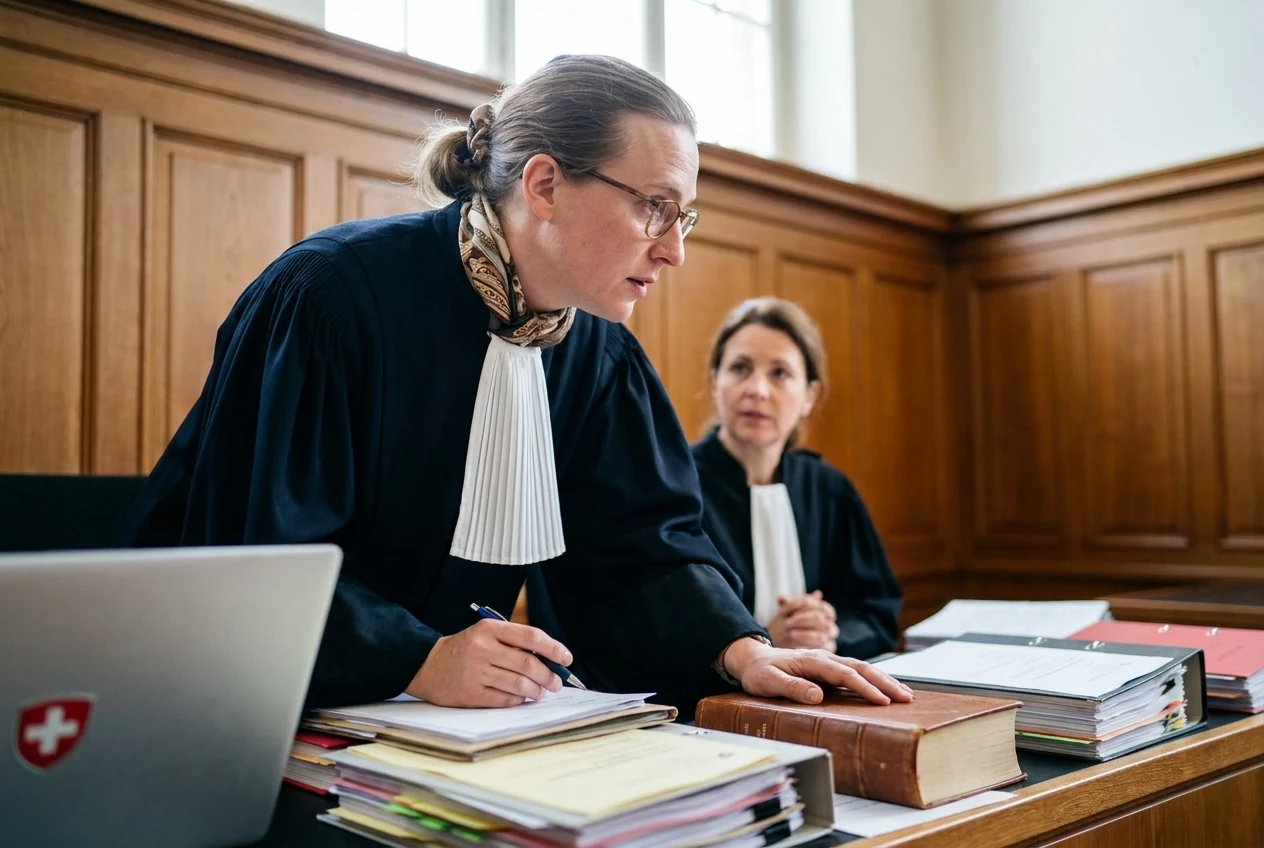
You sit at the judge's bench. You review the case files and listen to the final arguments from the defence. Then you discuss the evidence with your colleagues before you write the verdict.
You work in the courtrooms of criminal courts and appeals chambers. Your workplace is defined by formal procedures and legal files.
06 · Similar