Transport, Logistics & Safety

Diagnostiker/in SBB

You analyze technical faults on trains and ensure they are ready for service.
Diagnostiker/in SBB

01 · Overview

What this profession is about

Diagnostic technicians search for mechanical and electronic faults on trains. They repair them on site and document the results for maintenance.

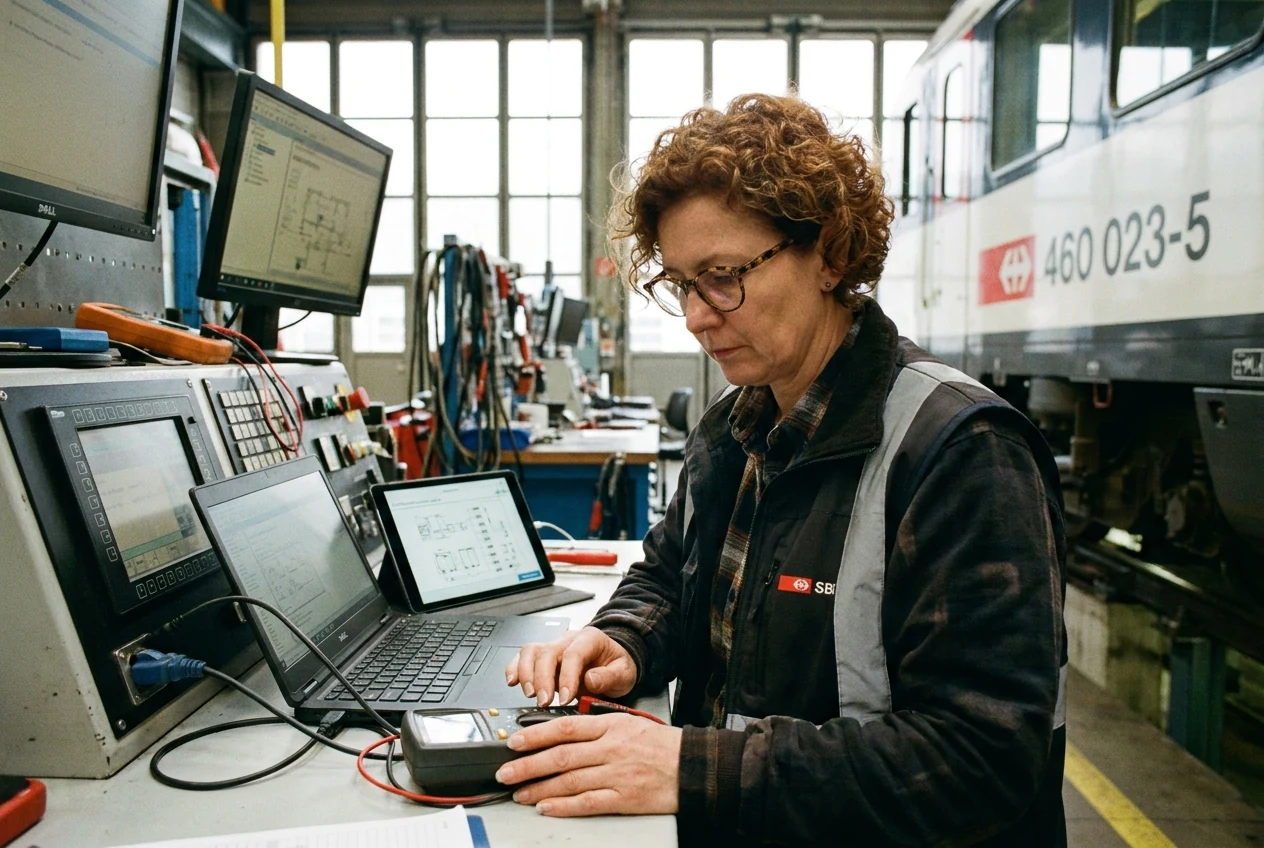
When trains break down, you are the first on the scene. As a diagnostic technician, you analyze mechanical and electronic faults on rail vehicles. You use modern diagnostic tools to find the cause. You repair the carriage or start further maintenance. Your precise work keeps rail traffic safe and on time.

FieldTransport, Logistics & Safety
Education pathSpecialisation / Professional Function
IndustryRail
Swissdoc 0.632.9.0

02 · Salary

What you can earn

No verified Swiss salary data is available for this profession yet.
Salaries reflect Swiss market data. Range covers entry to senior. Salary reference based on Diagnostiker/in SBB.

Salary by experience

60k65k58k65k0-2 yrs3-5 yrs
View as table
ExperienceSalary (CHF)
0-2 yrsCHF 58'025
3-5 yrsCHF 65'000

Salary trend

-37% over decade
40k50k60k70k65k73k41k2017-20192020-20222023-2025
View as table
PeriodSalary (CHF)
2017-2019CHF 65'000
2020-2022CHF 72'800
2023-2025CHF 41'028

03 · Pathway

How to enter and grow

Swiss training pathway available in the full profile

  • 🎓 Diagnostiker/in

Official education path

You start with a completed technical vocational apprenticeship. This is followed by internal practical training at the workplace.

Typical training path

Diagnostiker/in

Prerequisites

  • Driver's license Cat. B

Requirements

  • High sense of responsibility
  • Analytical-conceptual skills
  • IT knowledge
  • Physical resilience

Where this can lead

Career changers with a completed technical basic qualification and relevant work experience can receive internal further training.

04 · Skills & fit

What it takes

Required skills

  • Analytical thinking
  • Sense of responsibility
  • Technical understanding
  • Physical resilience

Personality fit

  • Swiss career path
  • Career transition
  • Professional growth

05 · Daily reality

What the work feels like

Typical day

You stand next to a broken-down train. You check the electronic controls with a diagnostic device. After finding the fault, you repair the defective part. Or you coordinate the transport to the workshop.

  • You quickly record technical problems on the vehicle and initiate repairs.
  • You use diagnostic tools to create precise fault analyses while checking technical documents.
  • You fix mechanical and electronic faults directly on the track or during downtime.
  • For major damage, you coordinate moving the carriage to the service facilities.
  • Your documentation of the repairs helps the next shift with maintenance.
  • You analyze recurring faults and develop measures to reduce errors.

Working conditions

You work mainly at stations, on track fields, and in maintenance halls of the rail infrastructure. Depending on the assignment, you switch between indoor and outdoor areas.

Strengths

  • Analytical thinking
  • Sense of responsibility
  • Technical understanding
  • Physical resilience

Trade-offs

  • Shift work
  • Weather conditions
  • High responsibility
  • Physical strain

06 · Similar

You might also explore

All in Transport, Logistics & Safety