Salary by experience
View as table
| Experience | Salary (CHF) |
|---|---|
| 0-2 yrs | CHF 80'000 |
| 3-5 yrs | CHF 45'000 |
| 6-8 yrs | CHF 74'000 |
| 9-11 yrs | CHF 129'000 |
| 12-21 yrs | CHF 129'073 |
| 21+ yrs | CHF 122'325 |
You assemble and inspect trains for safe passenger and freight transport.
01 · Overview
Rangierer/in prepare trains, carry out technical inspections, and coordinate complex shunting maneuvers in the station area.
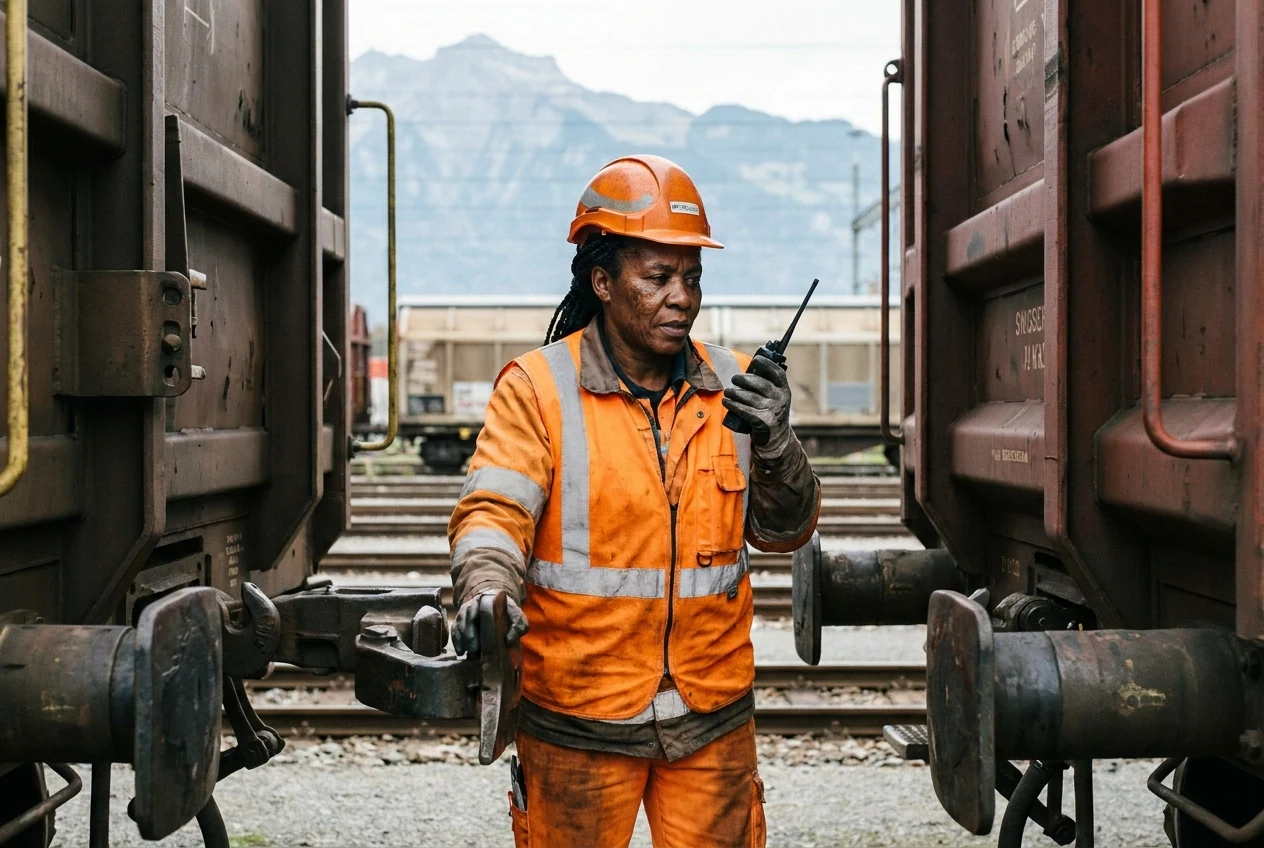
On station grounds, Rangierer/in ensure smooth operations. You inspect vehicles, release brakes, couple wagons, and carry out technical checks. Whether in passenger or freight transport: your work guarantees the safety and punctuality of the rail network. With technical understanding and a strong sense of responsibility, you actively shape daily train traffic.
02 · Salary
| Experience | Salary (CHF) |
|---|---|
| 0-2 yrs | CHF 80'000 |
| 3-5 yrs | CHF 45'000 |
| 6-8 yrs | CHF 74'000 |
| 9-11 yrs | CHF 129'000 |
| 12-21 yrs | CHF 129'073 |
| 21+ yrs | CHF 122'325 |
| Period | Salary (CHF) |
|---|---|
| 2014-2016 | CHF 45'000 |
| 2017-2019 | CHF 103'150 |
| 2020-2022 | CHF 129'073 |
| 2023-2025 | CHF 88'000 |
03 · Pathway
Swiss training pathway available in the full profile
Entry is made through completed initial vocational training or practical work experience in the logistics sector.
Rangierer und Rangierinnen
Lateral entry is possible with relevant work experience and practical on-the-job training.
04 · Skills & fit
05 · Daily reality
You stand on the platform and check the couplings of parked wagons. You coordinate the next shunting movements by radio while keeping the route in sight.
You work mainly on station grounds and in shunting yards. Your workplace includes tracks, locomotive sheds, and the driver cabins of the locomotives.
06 · Similar