Salary by experience
View as table
| Experience | Salary (CHF) |
|---|---|
| 0-2 yrs | CHF 84'000 |
| 3-5 yrs | CHF 82'061 |
| 6-8 yrs | CHF 82'261 |
| 9-11 yrs | CHF 146'000 |
| 12-21 yrs | CHF 118'000 |
You research molecular processes and develop new solutions for medicine and agriculture.
01 · Overview
Biochemists examine cell processes and develop innovative products for medicine, technology, and agriculture.
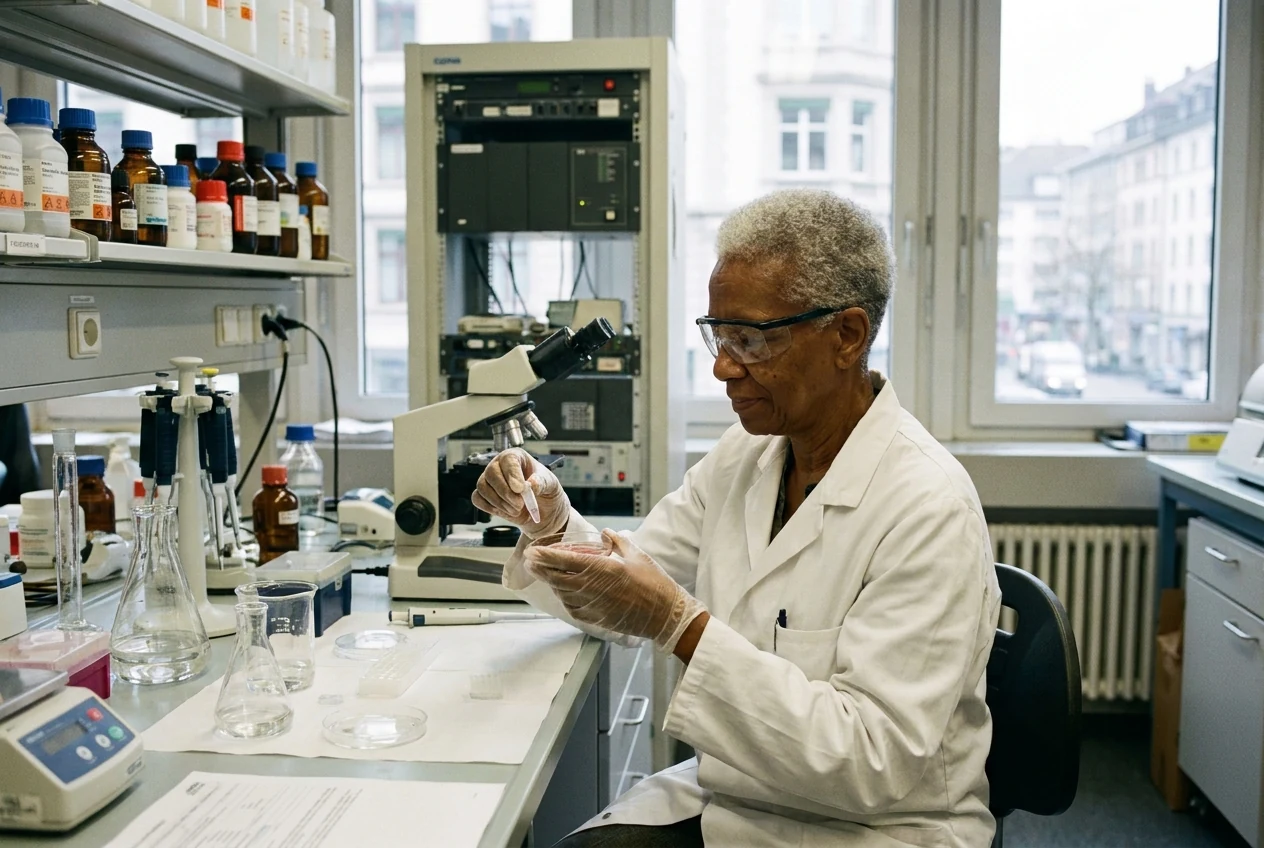
In the lab or at university, you analyse complex biological and chemical processes. You examine cells, genes, and enzymes to develop new medicines or resistant plants. Your work links basic research with practical use in industry, environmental protection, and higher education. You use modern analysis methods to answer questions about human health or food production.
02 · Salary
| Experience | Salary (CHF) |
|---|---|
| 0-2 yrs | CHF 84'000 |
| 3-5 yrs | CHF 82'061 |
| 6-8 yrs | CHF 82'261 |
| 9-11 yrs | CHF 146'000 |
| 12-21 yrs | CHF 118'000 |
| Period | Salary (CHF) |
|---|---|
| 2014-2016 | CHF 92'500 |
| 2017-2019 | CHF 91'500 |
| 2020-2022 | CHF 85'000 |
| 2023-2025 | CHF 76'829 |
| Industry | Salary | Obs. |
|---|---|---|
| Chemicals / Pharmaceuticals | CHF 89'122 | 29 |
03 · Pathway
Swiss training pathway available in the full profile
The degree is completed at a university or ETH and ends with a Bachelor of Science.
Bachelor of Science (UH/ETH) in Biochemistry (plus Angabe der unispezifischen oder selbst gewählten Fachrichtung)
A career change is possible after a related natural sciences degree or through specialised master's and further education programmes.
04 · Skills & fit
05 · Daily reality
You stand at the analysis device and record the reaction data of a bacterial culture. At the same time, you prepare samples for the next round of tests.
You work in research labs, at universities, in the biotechnology industry, or in public health. Your workplace is usually a modern lab or a university institute.
06 · Similar