Chemistry & Physics

Astronaut/in

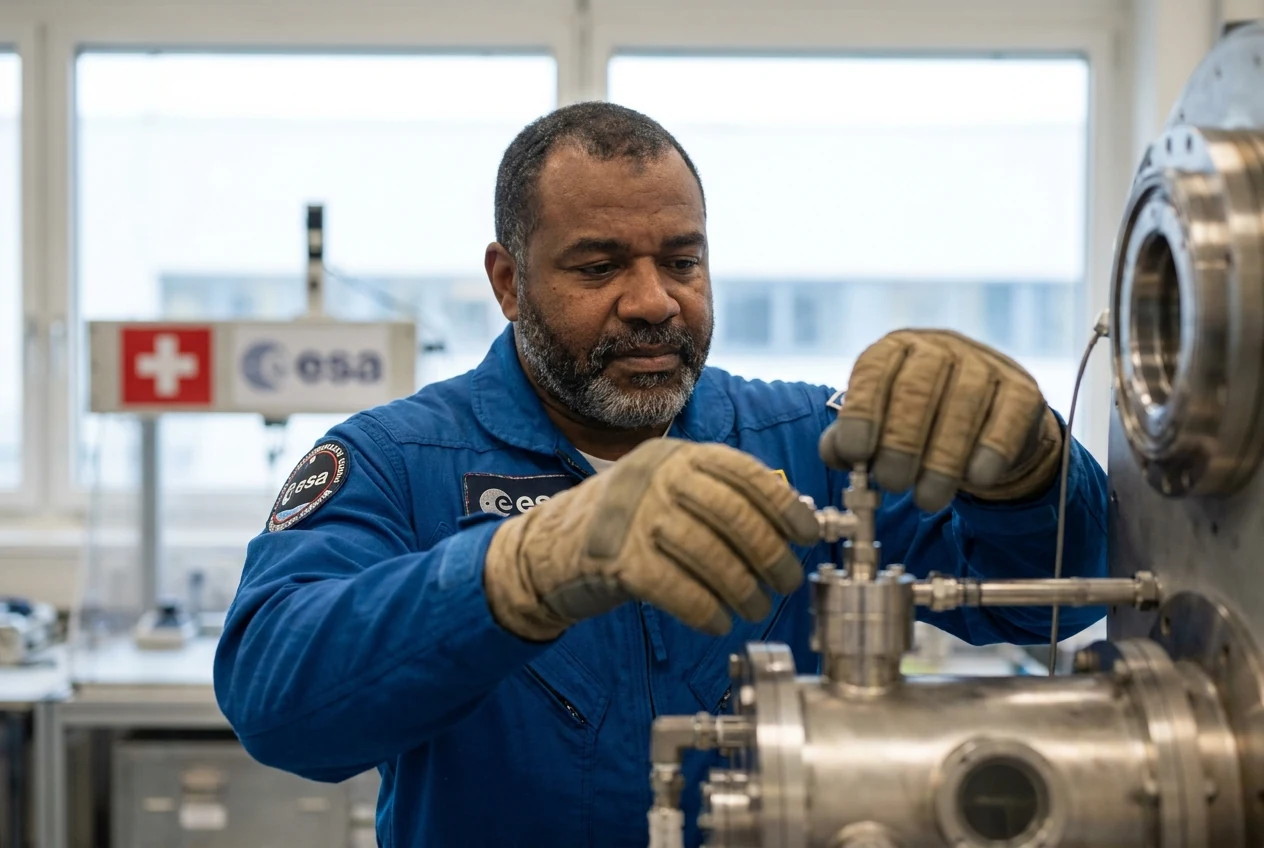
You explore outer space. You conduct scientific experiments in orbit.
Astronaut/in

01 · Overview

What this profession is about

You train for weightlessness. You operate space stations. You run research projects in space.

The path to the stars requires discipline and expertise. You prepare intensively for missions. You train for extreme conditions. You operate highly complex technology. In space, you conduct scientific experiments. You maintain the station systems. After returning, you analyse data. You share your unique experiences with the public.

FieldChemistry & Physics
Education pathHigher Education Profession
IndustryAviation
Swissdoc 0.160.44.0

02 · Salary

What you can earn

No verified Swiss salary data is available for this profession yet.
Salaries reflect Swiss market data. Range covers entry to senior. Salary reference based on Astronaut/in.

Salary by experience

50k100k99k107k120k24k0-2 yrs3-5 yrs6-8 yrs21+ yrs
View as table
ExperienceSalary (CHF)
0-2 yrsCHF 98'750
3-5 yrsCHF 107'000
6-8 yrsCHF 119'750
21+ yrsCHF 24'000

Salary trend

-73% over decade
50k100k91k130k24k2014-20162017-20192023-2025
View as table
PeriodSalary (CHF)
2014-2016CHF 90'500
2017-2019CHF 130'000
2023-2025CHF 24'000

03 · Pathway

How to enter and grow

  • 🎓 Abschluss der ESA

Official education path

Training takes place in three phases. It includes basic training, advanced training, and mission-specific training.

Typical training path

Abschluss der ESA

Curriculum

  • Astronomie
  • Astrophysik
  • Luft- und Raumfahrttechnik
  • Raketenbau, Raketentechnik
  • Aerodynamik, Aeromechanik
  • Avionik (Fluggerätetechnik)
  • Technische Physik und Mathematik
  • Triebwerkstechnik, Antriebstechnik
  • Bordelektronik, GPS, Satelliten und Funksysteme
  • Mess-, Steuer-, Regeltechnik
  • Pneumatik, Hydraulik
  • Wartung, Reparatur
  • Technische Dokumentation

Prerequisites

  • University degree in a natural science (e.g. physics, biology, chemistry or mathematics), engineering or medicine
  • At least 3 years of professional experience or flight experience as a pilot
  • Good oral and written English skills
  • Passed ESA medical examination

Requirements

  • Analytical-conceptual skills
  • Stress resistance
  • Physical resilience
  • Technical understanding
  • Strong teamwork skills
  • Networked thinking and action
  • Precise way of working
  • High sense of responsibility
  1. 1Astronomie
  2. 2Astrophysik
  3. 3Luft- und Raumfahrttechnik
  4. 4Raketenbau, Raketentechnik
  5. 5Aerodynamik, Aeromechanik
  6. 6Avionik (Fluggerätetechnik)
  7. 7Technische Physik und Mathematik
  8. 8Triebwerkstechnik, Antriebstechnik
  9. 9Bordelektronik, GPS, Satelliten und Funksysteme
  10. 10Mess-, Steuer-, Regeltechnik
  11. 11Pneumatik, Hydraulik
  12. 12Wartung, Reparatur
  13. 13Technische Dokumentation

Where this can lead

A career change is possible. You need relevant flight experience, technical expertise, or scientific qualifications. You must follow space agency guidelines.

04 · Skills & fit

What it takes

Required skills

  • Analytical thinking
  • Stress resistance
  • Teamwork
  • Physical endurance
  • Technical understanding

Personality fit

  • Swiss career path
  • Career transition
  • Professional growth

05 · Daily reality

What the work feels like

Typical day

In the morning, you check the station instruments. You run a planned experiment on materials. You communicate by radio with ground control. You also talk to the international team.

  • You train daily on special equipment. You stay fit for extreme weightlessness conditions.
  • You practice emergency scenarios. You learn to operate the station safely in a crisis.
  • You conduct scientific experiments in biology and physics. You work under controlled conditions.
  • You maintain the onboard electronics. You repair faulty systems during the mission.
  • You perform spacewalks. You install new instruments on the station.
  • You analyse collected measurement data. You write detailed reports for ground control.
  • You attend interviews and give talks. You inform the public about your mission.

Working conditions

You work in space stations and spacecraft in orbit. You also train in centres on Earth. You work in research institutes and space agencies.

Where to learn

  • European Space Agency (ESA) 24 Rue du Général Bertrand CS30798 75001

Strengths

  • Analytical thinking
  • Stress resistance
  • Teamwork
  • Physical endurance
  • Technical understanding

Trade-offs

  • Irregular working hours
  • Physical strain
  • High selection rate
  • Isolation in space

06 · Similar

You might also explore

All in Chemistry & Physics